


Specifying the correct fluid transfer technology for hygienic manufacturing environments is a precise engineering discipline. In the food, beverage, cosmetics, and biopharmaceutical sectors, positive displacement pumps are the standard choice for moving viscous or delicate ingredients. Among these technologies, the sine pump has earned a strong reputation for its exceptionally low-shear displacement, continuous flow profile, and outstanding high-vacuum suction capabilities.
However, because the mechanical architecture of a sinusoidal rotor differs fundamentally from traditional rotary lobe or progressive cavity pumps, engineers frequently make costly mistakes during the procurement and system design phases. Specifying a pump based on incorrect assumptions can lead to premature component wear, motor overloads, and unexpected production downtime. To safeguard your processing efficiency, ensure your engineering team avoids these five common pitfalls when specifying a sanitary sine pump.
Overlooking Fluid Abrasiveness and Mineral Content
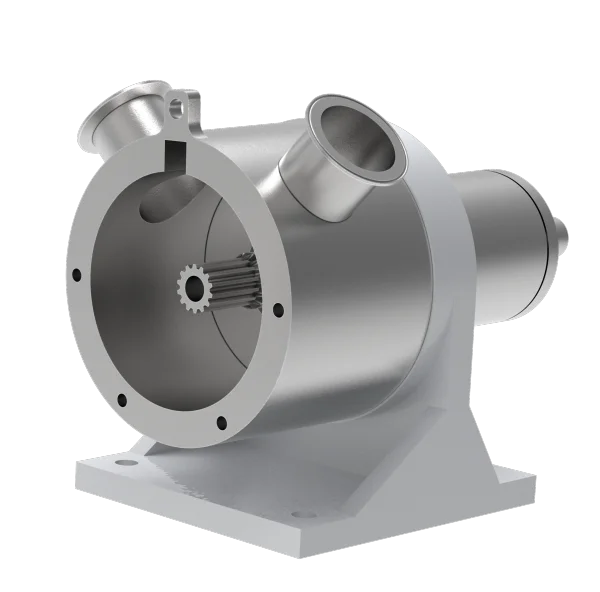
The single most common mistake when selecting a sine pump is failing to fully analyze the micro-particle characteristics of the process fluid. Sine pumps rely on a close, highly toleranced fit between the wave-like metal rotor, a mobile scraper gate, and a fixed polymer liner to hold a volumetric seal.
If your process fluid contains highly abrasive elements such as crystalline sugar slurries, ground spices, fine sands, or whole berry seeds, these micro-particles will act as an industrial grinding paste inside the pump head. Unlike non-contact rotary lobe pumps that allow micro-abrasives to pass through wide internal clearances with minimal friction, the rubbing contact points inside a sine pump will experience accelerated mechanical wear under these conditions. Specifying a sine pump for highly abrasive lines without planning for frequent liner and scraper replacements will rapidly degrade your volumetric efficiency.
Assuming Standard CIP Protocols Apply to Every Design
Process engineers frequently assume that because a pump carries a sanitary certification, it can be integrated directly into a standard automated Clean-in-Place loop without modifications. This assumption can lead to severe biological contamination or mechanical damage.
The unique, nested geometry of a sinusoidal rotor creates physical boundary layers and tight slip zones behind the scraper gate mechanism. In many standard sine pump designs, automated chemical flushing loops cannot generate enough localized velocity or turbulent force to clear these internal blind spots completely. Unless you specify a high-end customized configuration equipped with dedicated bypass channels or automated rinsing gates, these pumps are best suited for rapid manual teardowns or modified sanitizing routines. Running standard high-temperature CIP cycles through a non-optimized sine pump can also deform standard internal polymers if the material limits are exceeded.
Miscalculating Motor Power for Non-Newtonian Fluids
When sizing a motor for a fluid transfer skid, engineers often look at the viscosity value listed on a raw material data sheet and calculate the required horsepower using standard Newtonian flow formulas. This approach regularly results in motor trips and electrical overloads when dealing with complex food or cosmetic ingredients.
Many industrial materials are non-Newtonian, meaning their viscosity changes dynamically when subjected to mechanical force. Fluids like tomato pastes, heavy starches, and cosmetics gels are shear-thinning, while certain sugary syrups or dense batters can behave as shear-thickening media. Because a sine pump moves material at very low rotational speeds, the shear rate inside the chamber is exceptionally low. For a shear-thinning fluid, this low shear rate means the material will actually remain much thicker and more viscous inside the pump than it would inside a high-speed lobe pump. If you do not account for this higher real-world running viscosity, the motor you specify will lack the necessary torque to start up cold lines.
Ignoring System Backpressure and Temperature Limits
Every positive displacement pump operates within strict physical boundaries. Because the internal seal of a sine pump relies on flexible polymer components running against a stainless steel rotor, these internal elements are sensitive to extreme temperatures and high system backpressures.
Specifying a standard sine pump for a process loop that experiences discharge pressures exceeding 10 to 15 bar can cause the internal scraper gate to deflect or experience rapid mechanical fatigue. Similarly, introducing high-temperature fluids or live sterilization steam without specifying specialized high-performance PEEK or high-fluorine elastomer configurations will cause the internal liners to expand unevenly, leading to internal jamming. Always match your exact pipeline pressure spikes and thermal peaks with the specific physical limits of the pump internal materials.
Treating the Pump as a Standalone Component Rather Than a System Node
A pump does not operate in a vacuum. It is a single node within a complex network of automated valves, sensors, and piping runs. A frequent procurement mistake is buying a bare-shaft sine pump without evaluating the surrounding automation architecture.
Because sine pumps deliver a true zero-pulsation flow, they are highly responsive to speed adjustments and closed-loop feedback systems. If you fail to pair the pump drive with a high-resolution Variable Frequency Drive and integrated pressure transmitters, you miss out on the technology's core automated dosing and self-protecting capabilities. A well-designed matching system skid allows the pump to decelerate automatically when downstream filters begin to blinding, preventing line ruptures and extending the equipment lifespan.
The sanitary sine pump is an exceptional engineering solution for processing delicate, high-viscosity materials containing fragile particulate inclusions. However, maximizing your return on investment requires a thorough analysis of fluid abrasiveness, real-world viscosity profiles, and automation requirements. Avoiding these five common specification mistakes ensures your production line achieves long-term mechanical reliability and consistent product quality.


