


Bottom-Entry Magnetic High-Shear Emulsifying Mixer


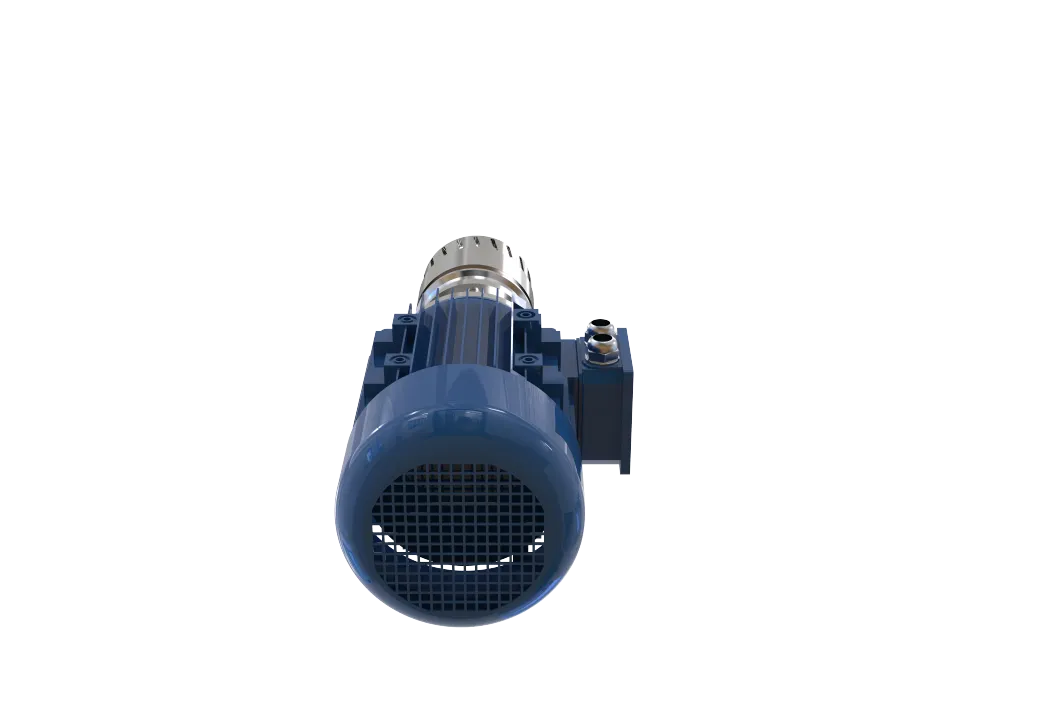
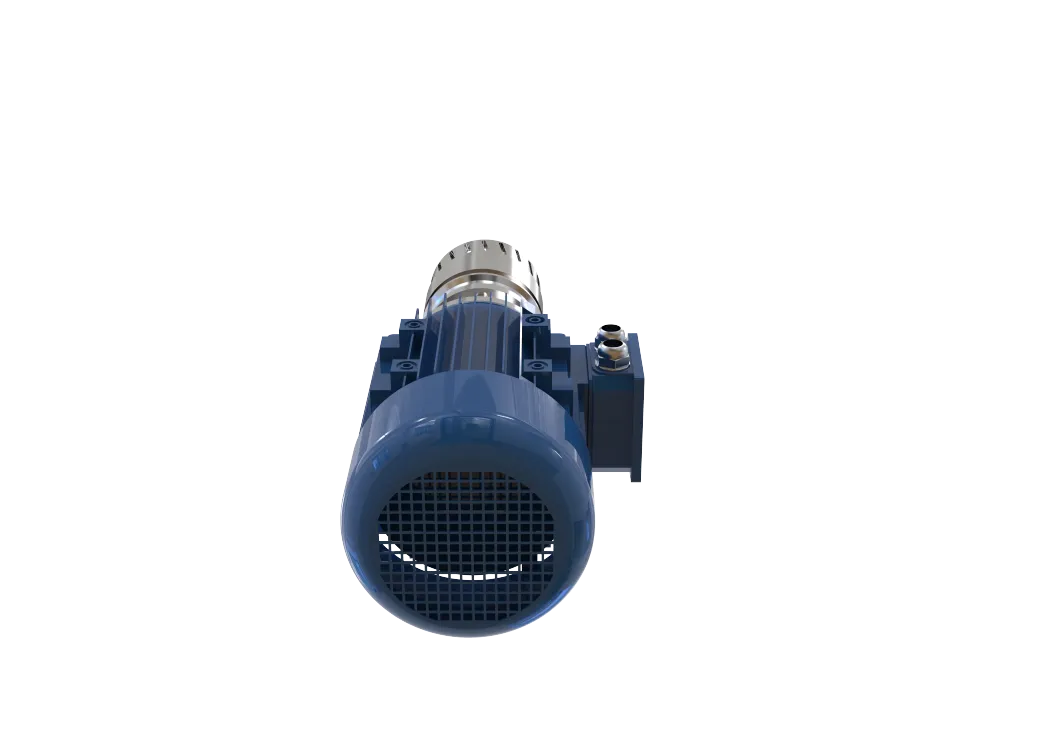


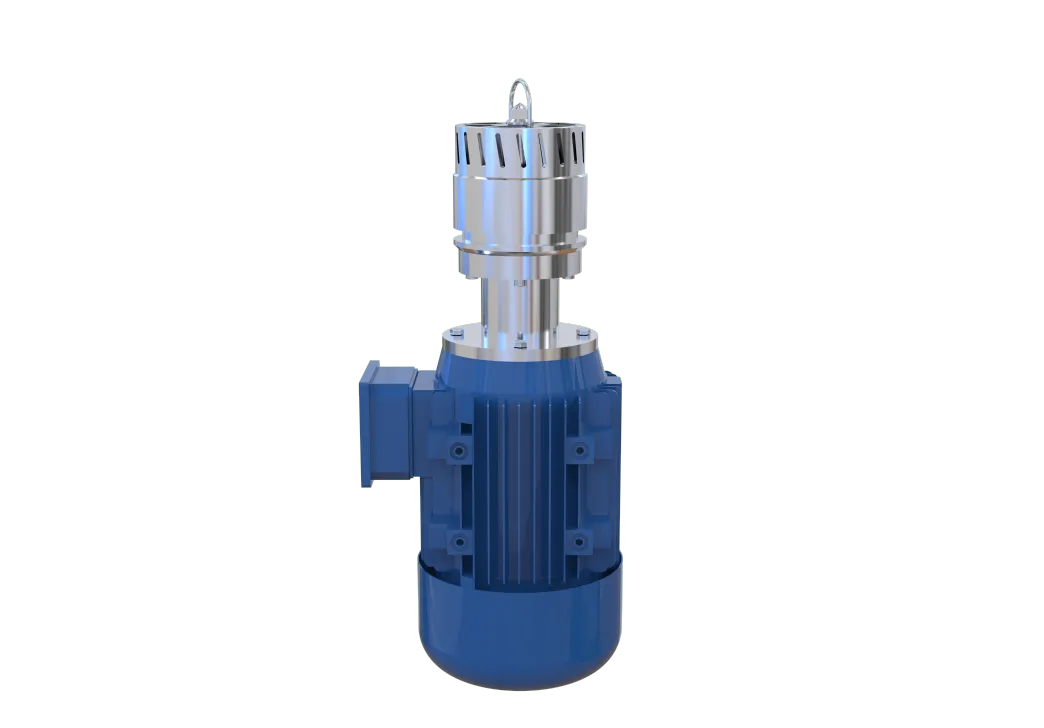
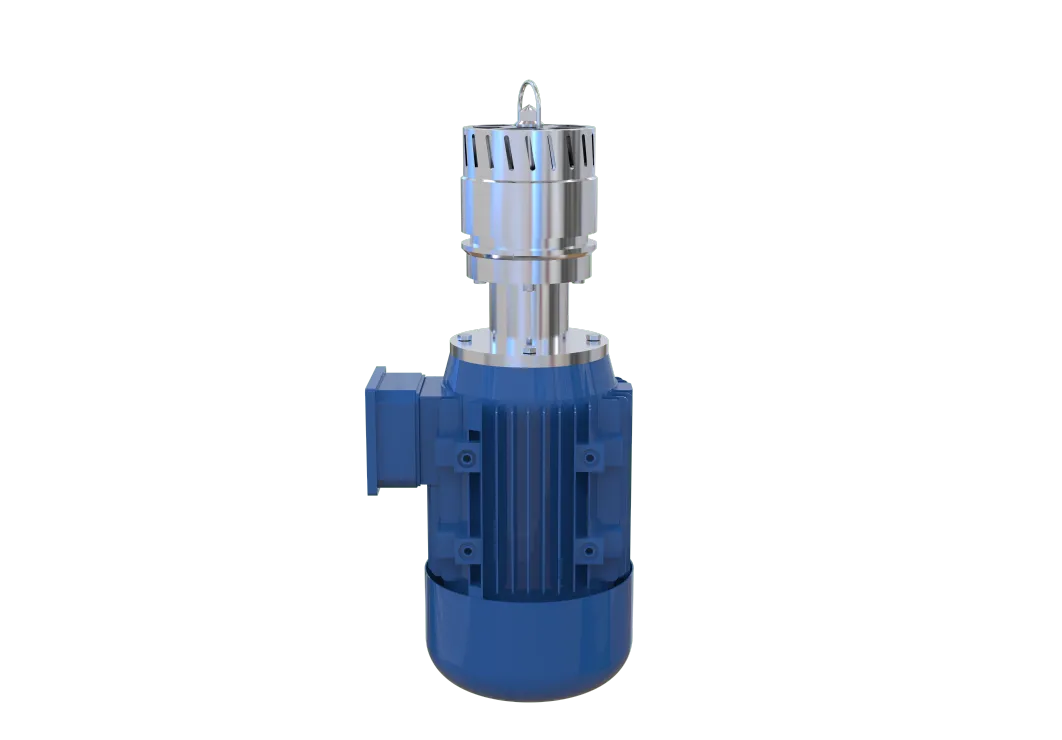
What Is a Bottom-Entry Magnetic High-Shear Emulsifying Mixer?
A Bottom-Entry Magnetic High-Shear Emulsifying Mixer is a bottom-mounted mixing device that uses magnetic coupling to transmit torque from an external drive to an internal impeller. Designed for applications where product purity, leak prevention, and hygienic operation are important, it provides an alternative to conventional agitators that rely on mechanical shaft seals.
In traditional shaft-driven mixing systems, the rotating shaft passes through the vessel wall, creating a dynamic sealing point. Under demanding operating conditions, this seal may become a source of leakage, wear, or contamination. A bottom-entry magnetic mixer addresses this issue by transmitting torque magnetically through a stationary isolation sleeve. The internal and external magnetic assemblies remain physically separated, eliminating the need for a rotating shaft to penetrate the vessel boundary.
This design makes the mixer suitable for pharmaceutical, food, and other hygienic processing applications involving dissolution, blending, ingredient preparation, and liquid mixing.
How Does a Bottom-Entry Magnetic Mixer Work?
The mixer consists of an internal magnetic assembly with an impeller, an isolation sleeve, a sliding bearing, an external magnetic assembly, and a drive unit. Product-contact components can be manufactured from stainless steel 316L or 304, depending on process requirements. The sliding bearing can be supplied in silicon carbide or hard alloy.
During operation, the drive unit rotates the external magnetic assembly. Magnetic force transfers the torque through the isolation sleeve to the internal magnetic assembly, causing the impeller inside the vessel to rotate without a conventional drive shaft passing through the tank wall.
As the impeller rotates, it draws surrounding liquid and soluble ingredients toward its suction area. The rotating impeller then accelerates the material outward, producing radial flow toward the vessel wall. After reaching the wall, the liquid changes direction and contributes to the circulation pattern inside the tank, returning toward the impeller for further mixing.
This repeated circulation helps distribute ingredients throughout the vessel. Depending on the formulation and operating conditions, the mixer can support liquid blending, powder dissolution, and solid-liquid dispersion.
Mixing performance depends on factors such as liquid viscosity, ingredient concentration, impeller design, tank geometry, and operating speed. These factors should be considered when evaluating the mixer for a specific formulation.
Key Advantages of Bottom-Entry Magnetic Mixing Technology
Static Sealing for Improved Leak Prevention
The primary advantage of a magnetic bottom-entry mixer is its sealing arrangement. Instead of using a dynamic mechanical seal around a rotating shaft, the design uses a stationary isolation sleeve to separate the internal magnetic assembly from the external drive.
This arrangement removes the conventional rotating shaft penetration and its associated dynamic sealing point. It is particularly valuable when processing expensive pharmaceutical ingredients, sterile formulations, or products that must be protected from external contamination.
The isolation sleeve and its joints remain critical parts of the overall containment system. Their integrity, material compatibility, and suitability for the intended pressure and temperature conditions must be verified during equipment selection.
Hygienic Design for Easier Cleaning
The simplified drive arrangement reduces the number of components associated with conventional shaft sealing. The mixer is designed for straightforward disassembly and cleaning, helping operators maintain hygienic conditions between batches.
Its bottom-mounted configuration can also be useful in tanks where internal space and equipment accessibility are important considerations. For pharmaceutical and food production, however, cleanability depends on more than the mixer alone. Impeller geometry, vessel-bottom design, drainability, product residues, and the validated cleaning procedure all affect the final result.
Where clean-in-place (CIP) or sterilization-in-place (SIP) is required, the complete assembly should be evaluated for compatibility with the specified cleaning agents, temperatures, and operating cycles.
Mixing at Low Liquid Levels
Because the impeller is installed at the bottom of the vessel, the mixer can be useful for processes in which the working liquid level changes during production. This can help when preparing small batches, adding concentrated ingredients, or mixing the remaining product during a batch operation.
Actual minimum operating liquid levels depend on the impeller design, tank geometry, rotational speed, and the tendency of the liquid to form a vortex. These conditions should be checked to avoid air entrainment or unstable circulation.
Lower Mechanical-Seal Maintenance Requirements
The absence of a conventional rotating shaft seal eliminates one common source of mechanical-seal wear and maintenance. The external drive and internal mixing assembly are connected through magnetic coupling rather than a direct mechanical shaft.
The mixer still contains components that require inspection, particularly the sliding bearing, isolation sleeve, and magnetic assemblies. Selecting suitable bearing materials and confirming compatibility with the process fluid are important for reliable long-term operation.
Applications in Pharmaceutical Manufacturing
Pharmaceutical production often involves strict requirements for contamination control, batch consistency, and equipment cleanability. Bottom-entry magnetic mixers can be used in stainless steel preparation tanks, formulation vessels, storage tanks, and other process vessels where controlled liquid mixing is required.
Typical applications include:
- Large-volume parenteral solutions: Mixing ingredients during solution preparation before subsequent filtration and filling operations.
- Small-volume injections: Supporting the blending and dissolution of formulation components in preparation vessels.
- Vaccines and biological products: Providing mixing in compatible preparation or buffer vessels, subject to the product's shear sensitivity and process requirements.
- Blood products and insulin formulations: Supporting liquid preparation and blending where containment and contamination control are important.
- Oral liquid medicines: Dissolving soluble ingredients and distributing formulation components before downstream processing.
For biologics, vaccines, and other sensitive formulations, the impeller's shear characteristics and the resulting circulation pattern must be assessed against the specific product requirements. The mixer should not be assumed suitable for every shear-sensitive process without application-level evaluation.
Supporting Hygienic Liquid Preparation Systems
The mixer can be integrated into a broader preparation system that includes a stainless steel vessel, ingredient charging arrangements, temperature control, transfer pumps, filtration equipment, and cleaning provisions.
In such systems, the mixer supports the preparation stage rather than replacing downstream operations. For example, solution mixing may be followed by filtration, holding, transfer, or filling. The complete equipment arrangement should be designed around the formulation sequence, cleaning strategy, and required product quality.
Applications in Food and Beverage Processing
In food processing, consistent ingredient distribution is essential for product quality and batch repeatability. A bottom-entry magnetic mixer can be used in suitable preparation tanks for dissolving soluble ingredients, blending liquids, and dispersing compatible components.
Potential applications include syrup preparation, liquid ingredient blending, beverage bases, and other formulations that benefit from controlled circulation. The bottom-mounted impeller can help move liquid from the vessel's lower region and establish circulation throughout the tank.
For products containing suspended solids or ingredients with different densities, the impeller's flow pattern and the risk of sedimentation should be evaluated. Highly viscous products may require a different impeller arrangement or a mixing technology specifically designed for high-viscosity service.
Material selection is also important. Stainless steel 316L may be preferred for certain demanding product-contact requirements, while 304 may be suitable for other applications. The final choice should reflect the formulation's chemical properties, cleaning regime, and applicable hygiene requirements.
What Should You Consider When Selecting a Magnetic Bottom Mixer?
Selecting a mixer involves more than confirming the vessel volume. The formulation and the required mixing result determine whether the impeller can deliver the necessary circulation and dispersion.
Product properties: Viscosity, density, solids content, solubility, and sensitivity to shear influence mixing behavior. Powders that wet poorly or liquids that dissolve slowly may require a different charging strategy or additional mixing measures.
Required mixing result: General blending, powder dissolution, and solid-liquid dispersion do not impose identical requirements. If the process requires fine emulsification or a narrowly controlled droplet size, confirm that the selected impeller and mixing conditions can achieve the target. A magnetic drive alone does not guarantee high-shear emulsification performance.
Vessel and installation conditions: Tank diameter, bottom geometry, working liquid level, available installation space, and the location of other internal components affect circulation and installation suitability.
Materials and bearing compatibility: The product-contact stainless steel and sliding bearing materials should be compatible with the formulation, cleaning agents, and expected operating conditions.
Cleaning and containment requirements: Confirm the required cleaning method, sterilization conditions, isolation-sleeve integrity, and sealing requirements for the complete assembly. These details are particularly important for pharmaceutical applications.
A Practical Mixing Solution for Hygienic Processing
The Bottom-Entry Magnetic High-Shear Emulsifying Mixer combines bottom-mounted impeller placement with magnetic torque transmission and a static isolation sleeve. By eliminating the conventional rotating shaft penetration, it helps address leakage risks associated with dynamic shaft seals while providing a compact arrangement for liquid preparation, blending, and dissolution.
For pharmaceutical and food manufacturers, its value lies in the combination of containment-oriented design, accessible maintenance, and bottom-entry mixing. When the impeller, bearing materials, vessel geometry, and cleaning arrangements are matched to the actual process, the mixer can become a practical component of a hygienic preparation system.

Description
What Is a Bottom-Entry Magnetic High-Shear Emulsifying Mixer?
A Bottom-Entry Magnetic High-Shear Emulsifying Mixer is a bottom-mounted mixing device that uses magnetic coupling to transmit torque from an external drive to an internal impeller. Designed for applications where product purity, leak prevention, and hygienic operation are important, it provides an alternative to conventional agitators that rely on mechanical shaft seals.
In traditional shaft-driven mixing systems, the rotating shaft passes through the vessel wall, creating a dynamic sealing point. Under demanding operating conditions, this seal may become a source of leakage, wear, or contamination. A bottom-entry magnetic mixer addresses this issue by transmitting torque magnetically through a stationary isolation sleeve. The internal and external magnetic assemblies remain physically separated, eliminating the need for a rotating shaft to penetrate the vessel boundary.
This design makes the mixer suitable for pharmaceutical, food, and other hygienic processing applications involving dissolution, blending, ingredient preparation, and liquid mixing.
How Does a Bottom-Entry Magnetic Mixer Work?
The mixer consists of an internal magnetic assembly with an impeller, an isolation sleeve, a sliding bearing, an external magnetic assembly, and a drive unit. Product-contact components can be manufactured from stainless steel 316L or 304, depending on process requirements. The sliding bearing can be supplied in silicon carbide or hard alloy.
During operation, the drive unit rotates the external magnetic assembly. Magnetic force transfers the torque through the isolation sleeve to the internal magnetic assembly, causing the impeller inside the vessel to rotate without a conventional drive shaft passing through the tank wall.
As the impeller rotates, it draws surrounding liquid and soluble ingredients toward its suction area. The rotating impeller then accelerates the material outward, producing radial flow toward the vessel wall. After reaching the wall, the liquid changes direction and contributes to the circulation pattern inside the tank, returning toward the impeller for further mixing.
This repeated circulation helps distribute ingredients throughout the vessel. Depending on the formulation and operating conditions, the mixer can support liquid blending, powder dissolution, and solid-liquid dispersion.
Mixing performance depends on factors such as liquid viscosity, ingredient concentration, impeller design, tank geometry, and operating speed. These factors should be considered when evaluating the mixer for a specific formulation.
Key Advantages of Bottom-Entry Magnetic Mixing Technology
Static Sealing for Improved Leak Prevention
The primary advantage of a magnetic bottom-entry mixer is its sealing arrangement. Instead of using a dynamic mechanical seal around a rotating shaft, the design uses a stationary isolation sleeve to separate the internal magnetic assembly from the external drive.
This arrangement removes the conventional rotating shaft penetration and its associated dynamic sealing point. It is particularly valuable when processing expensive pharmaceutical ingredients, sterile formulations, or products that must be protected from external contamination.
The isolation sleeve and its joints remain critical parts of the overall containment system. Their integrity, material compatibility, and suitability for the intended pressure and temperature conditions must be verified during equipment selection.
Hygienic Design for Easier Cleaning
The simplified drive arrangement reduces the number of components associated with conventional shaft sealing. The mixer is designed for straightforward disassembly and cleaning, helping operators maintain hygienic conditions between batches.
Its bottom-mounted configuration can also be useful in tanks where internal space and equipment accessibility are important considerations. For pharmaceutical and food production, however, cleanability depends on more than the mixer alone. Impeller geometry, vessel-bottom design, drainability, product residues, and the validated cleaning procedure all affect the final result.
Where clean-in-place (CIP) or sterilization-in-place (SIP) is required, the complete assembly should be evaluated for compatibility with the specified cleaning agents, temperatures, and operating cycles.
Mixing at Low Liquid Levels
Because the impeller is installed at the bottom of the vessel, the mixer can be useful for processes in which the working liquid level changes during production. This can help when preparing small batches, adding concentrated ingredients, or mixing the remaining product during a batch operation.
Actual minimum operating liquid levels depend on the impeller design, tank geometry, rotational speed, and the tendency of the liquid to form a vortex. These conditions should be checked to avoid air entrainment or unstable circulation.
Lower Mechanical-Seal Maintenance Requirements
The absence of a conventional rotating shaft seal eliminates one common source of mechanical-seal wear and maintenance. The external drive and internal mixing assembly are connected through magnetic coupling rather than a direct mechanical shaft.
The mixer still contains components that require inspection, particularly the sliding bearing, isolation sleeve, and magnetic assemblies. Selecting suitable bearing materials and confirming compatibility with the process fluid are important for reliable long-term operation.
Applications in Pharmaceutical Manufacturing
Pharmaceutical production often involves strict requirements for contamination control, batch consistency, and equipment cleanability. Bottom-entry magnetic mixers can be used in stainless steel preparation tanks, formulation vessels, storage tanks, and other process vessels where controlled liquid mixing is required.
Typical applications include:
- Large-volume parenteral solutions: Mixing ingredients during solution preparation before subsequent filtration and filling operations.
- Small-volume injections: Supporting the blending and dissolution of formulation components in preparation vessels.
- Vaccines and biological products: Providing mixing in compatible preparation or buffer vessels, subject to the product's shear sensitivity and process requirements.
- Blood products and insulin formulations: Supporting liquid preparation and blending where containment and contamination control are important.
- Oral liquid medicines: Dissolving soluble ingredients and distributing formulation components before downstream processing.
For biologics, vaccines, and other sensitive formulations, the impeller's shear characteristics and the resulting circulation pattern must be assessed against the specific product requirements. The mixer should not be assumed suitable for every shear-sensitive process without application-level evaluation.
Supporting Hygienic Liquid Preparation Systems
The mixer can be integrated into a broader preparation system that includes a stainless steel vessel, ingredient charging arrangements, temperature control, transfer pumps, filtration equipment, and cleaning provisions.
In such systems, the mixer supports the preparation stage rather than replacing downstream operations. For example, solution mixing may be followed by filtration, holding, transfer, or filling. The complete equipment arrangement should be designed around the formulation sequence, cleaning strategy, and required product quality.
Applications in Food and Beverage Processing
In food processing, consistent ingredient distribution is essential for product quality and batch repeatability. A bottom-entry magnetic mixer can be used in suitable preparation tanks for dissolving soluble ingredients, blending liquids, and dispersing compatible components.
Potential applications include syrup preparation, liquid ingredient blending, beverage bases, and other formulations that benefit from controlled circulation. The bottom-mounted impeller can help move liquid from the vessel's lower region and establish circulation throughout the tank.
For products containing suspended solids or ingredients with different densities, the impeller's flow pattern and the risk of sedimentation should be evaluated. Highly viscous products may require a different impeller arrangement or a mixing technology specifically designed for high-viscosity service.
Material selection is also important. Stainless steel 316L may be preferred for certain demanding product-contact requirements, while 304 may be suitable for other applications. The final choice should reflect the formulation's chemical properties, cleaning regime, and applicable hygiene requirements.
What Should You Consider When Selecting a Magnetic Bottom Mixer?
Selecting a mixer involves more than confirming the vessel volume. The formulation and the required mixing result determine whether the impeller can deliver the necessary circulation and dispersion.
Product properties: Viscosity, density, solids content, solubility, and sensitivity to shear influence mixing behavior. Powders that wet poorly or liquids that dissolve slowly may require a different charging strategy or additional mixing measures.
Required mixing result: General blending, powder dissolution, and solid-liquid dispersion do not impose identical requirements. If the process requires fine emulsification or a narrowly controlled droplet size, confirm that the selected impeller and mixing conditions can achieve the target. A magnetic drive alone does not guarantee high-shear emulsification performance.
Vessel and installation conditions: Tank diameter, bottom geometry, working liquid level, available installation space, and the location of other internal components affect circulation and installation suitability.
Materials and bearing compatibility: The product-contact stainless steel and sliding bearing materials should be compatible with the formulation, cleaning agents, and expected operating conditions.
Cleaning and containment requirements: Confirm the required cleaning method, sterilization conditions, isolation-sleeve integrity, and sealing requirements for the complete assembly. These details are particularly important for pharmaceutical applications.
A Practical Mixing Solution for Hygienic Processing
The Bottom-Entry Magnetic High-Shear Emulsifying Mixer combines bottom-mounted impeller placement with magnetic torque transmission and a static isolation sleeve. By eliminating the conventional rotating shaft penetration, it helps address leakage risks associated with dynamic shaft seals while providing a compact arrangement for liquid preparation, blending, and dissolution.
For pharmaceutical and food manufacturers, its value lies in the combination of containment-oriented design, accessible maintenance, and bottom-entry mixing. When the impeller, bearing materials, vessel geometry, and cleaning arrangements are matched to the actual process, the mixer can become a practical component of a hygienic preparation system.
Application


Specifications
| Model | CJR1 | CJR2 | CJR4 | CJR6 | CJR8 | CJR12 | CJR16 | CJR20 | |
|---|---|---|---|---|---|---|---|---|---|
| Volume Range | 50-300 | 100-500 | 200-800 | 300-1000 | 400-1500 | 600-2000 | 800-3000 | 1000-5000 | L |
| Impeller Dia. | 80 | 95 | 110 | 120 | 130 | 160 | 180 | 200 | mm |
| Power at ≤960rpm | 0.55 | 0.75 | 1.1 | 1.5 | 2.2 | 3.0 | 4.0 | 5.5 | kw |
| Power at ≤1450rpm | 0.75 | 1.1 | 2.2 | 3.0 | 4.0 | 5.5 | 11 | 18.5 | kw |
| Power at ≤2800rpm | 2.2 | 3.0 | 5.5 | 11 | 15 | 30 | 37 | kw |
Advantage Comparison


GET IN TOUCH NOW


