


Integrated Bottom-Entry Magnetic Stirrer
In high-purity industries such as biopharmaceuticals, vaccine formulation, functional food processing, and laboratory research, achieving absolute sterility and maximum product recovery is an ongoing engineering challenge. Conventional vessel designs, which treat mixing systems and discharge mechanisms as separate components, frequently suffer from localized fluid stagnation, batch-to-batch cross-contamination, and expensive product loss.
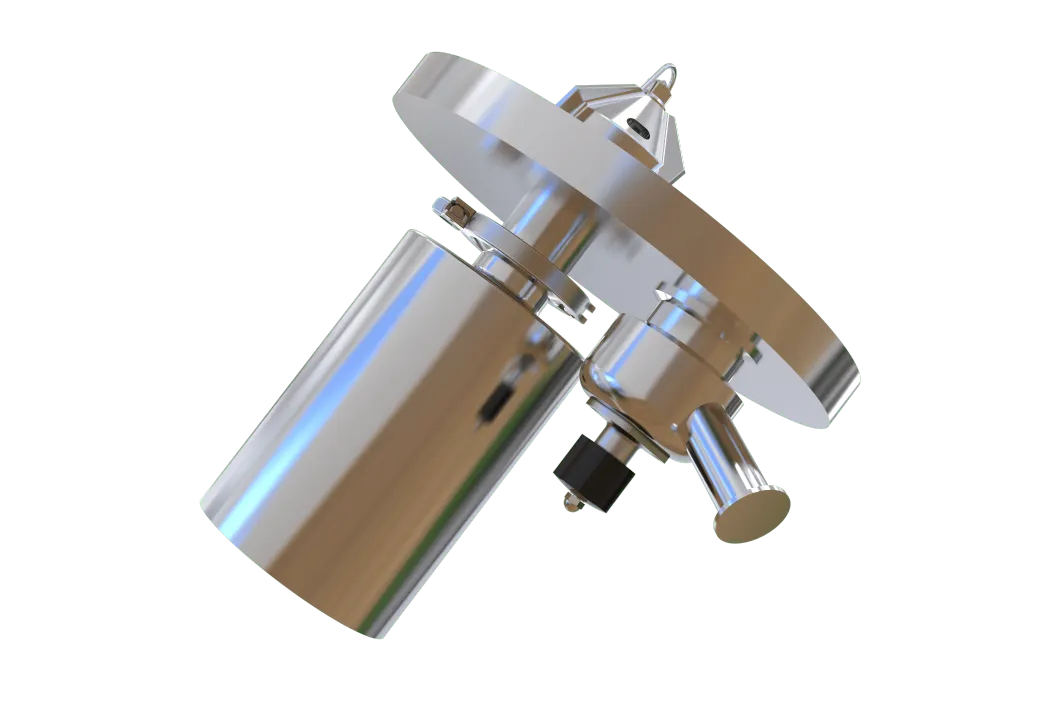
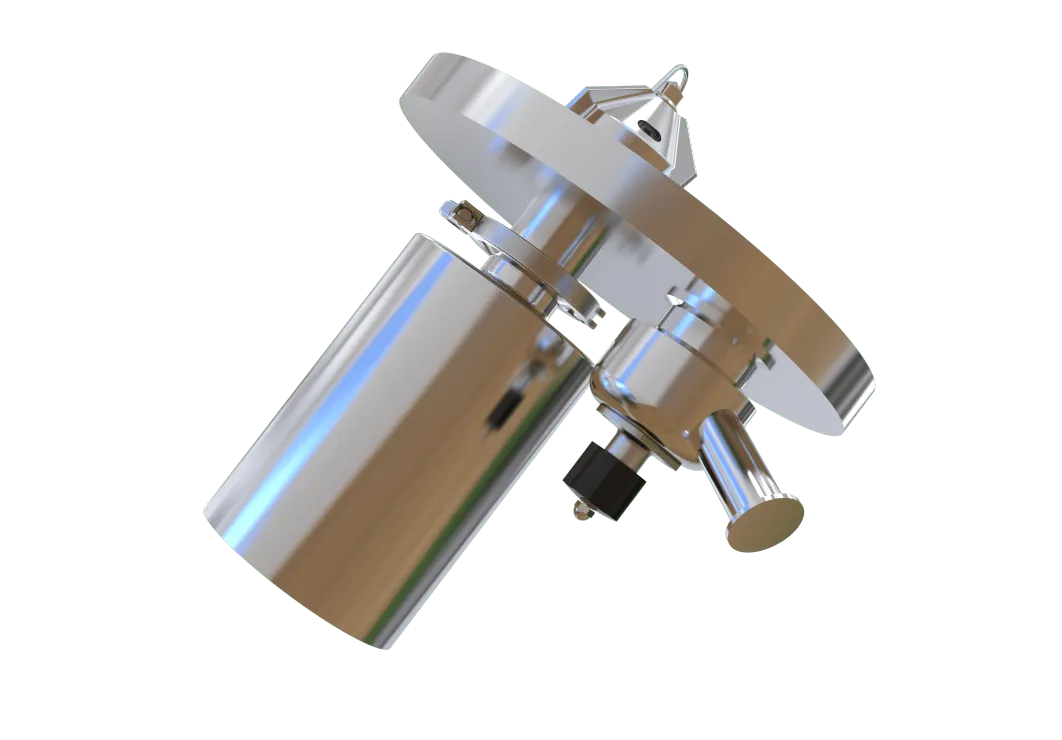
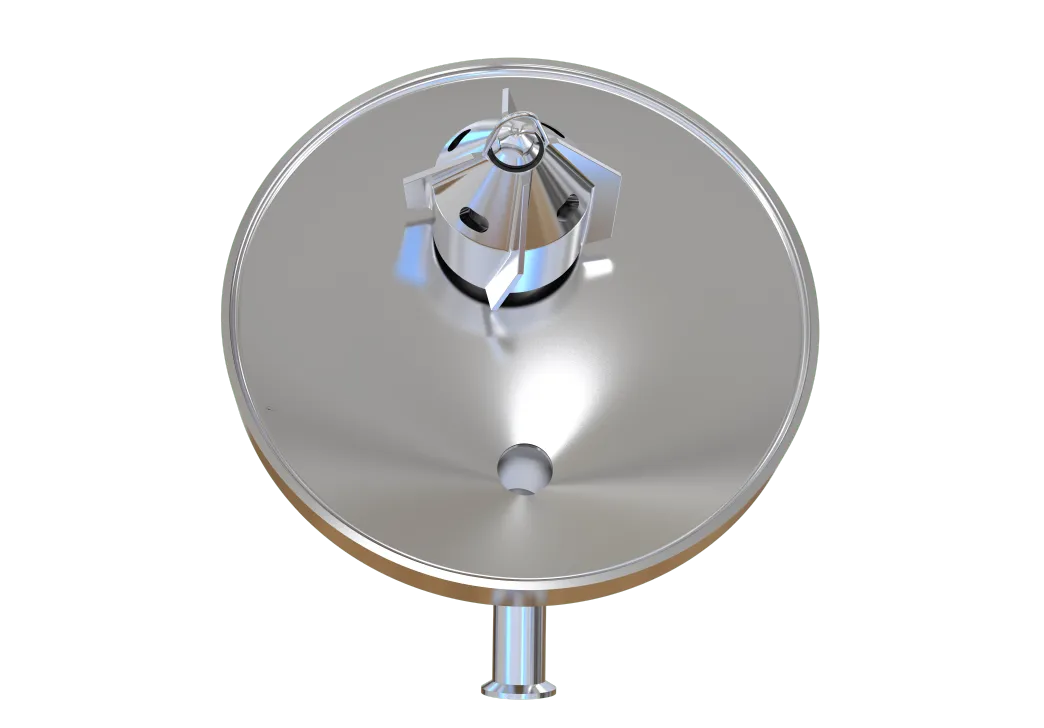
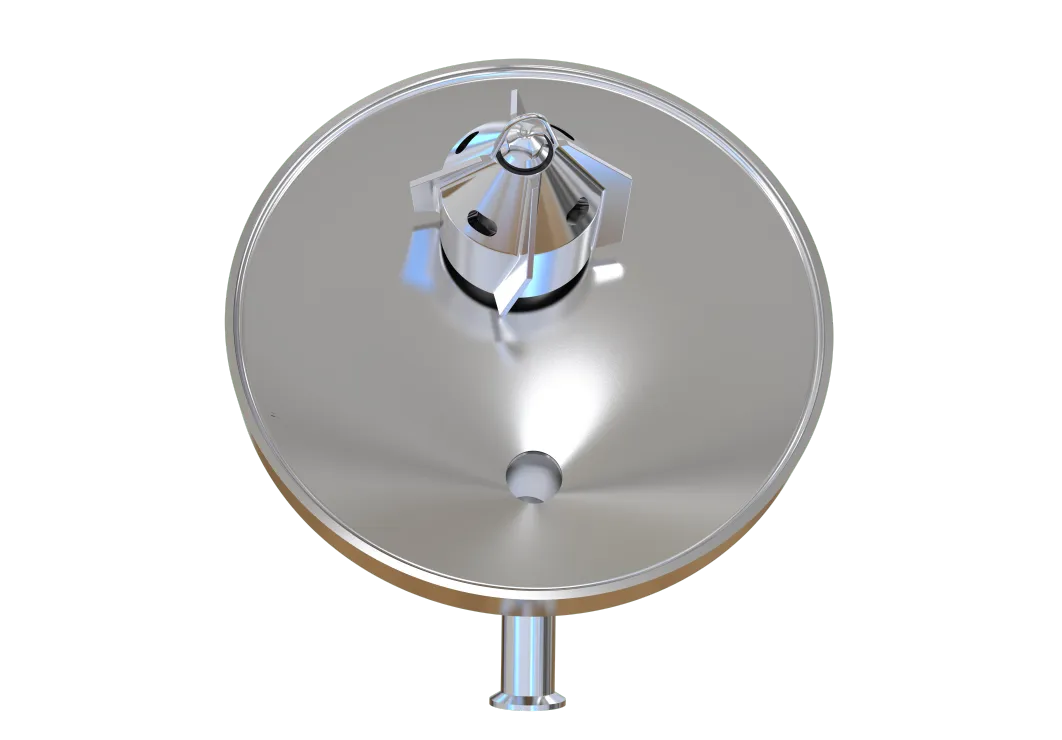
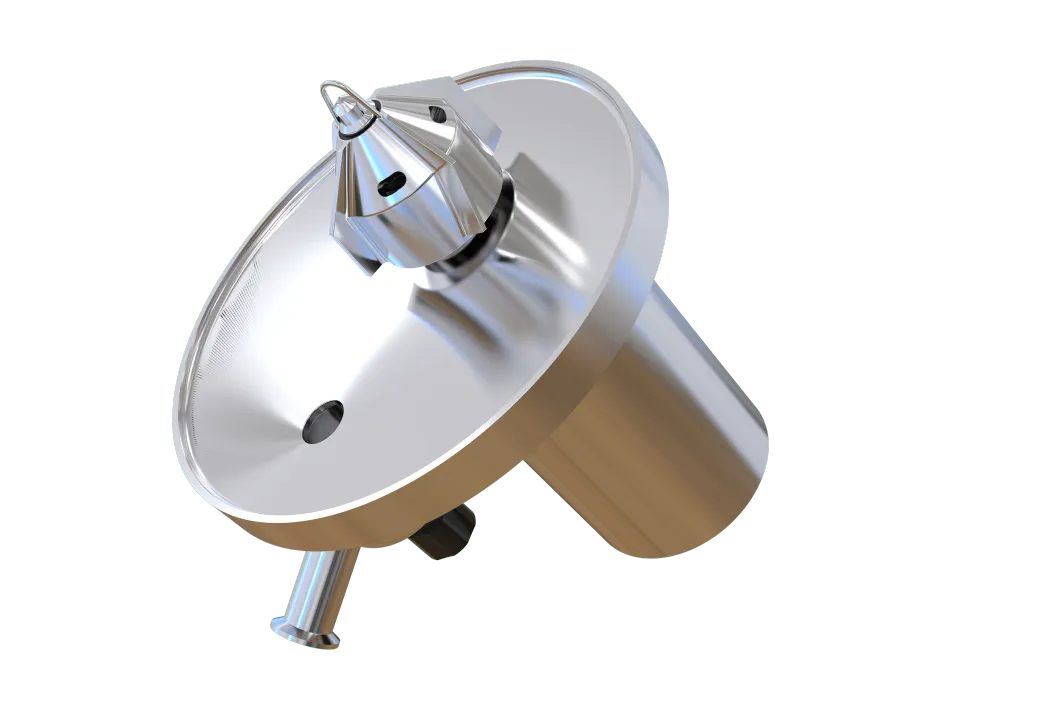
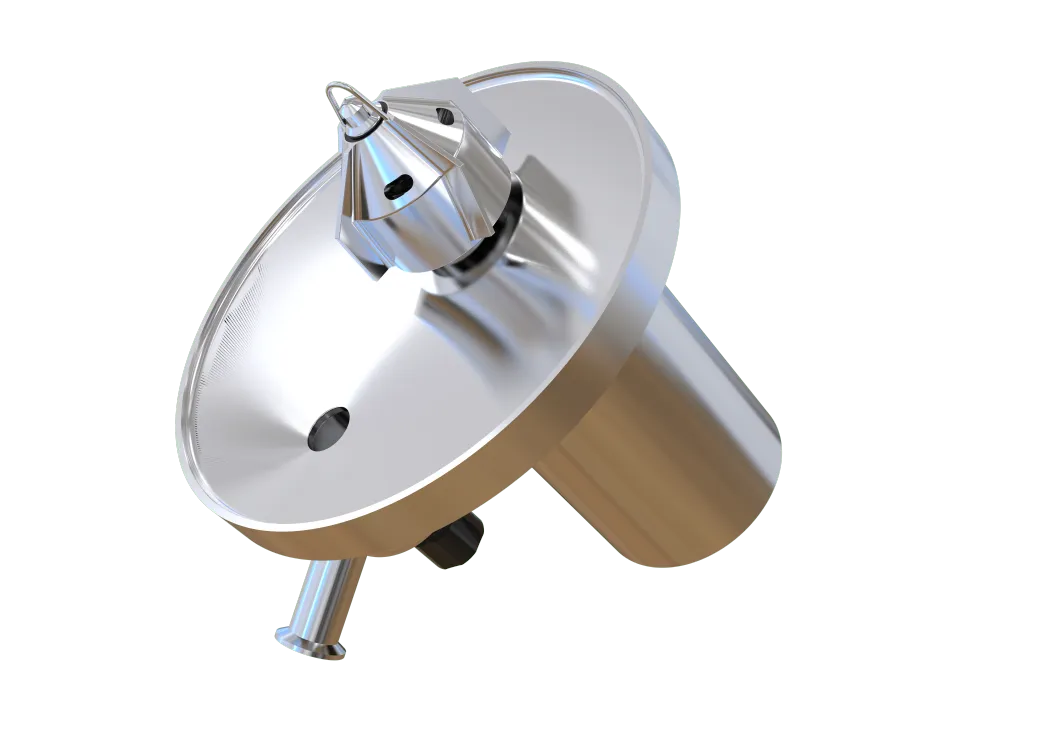
Our Integrated Integrated Bottom-Entry Magnetic Stirrer redefines sanitary fluid handling. By engineering the isolation sleeve, the vessel bottom dish end, and the flush tank-bottom discharge valve into a single, seamless, monolithic block, this advanced process solution eliminates stagnant zones entirely, delivering true zero-dead-leg performance and complete product drainage.
The Engineering Challenge
Traditional sanitary vessel fabrication requires engineers to source the magnetic stirrer and the bottom outlet valve from different suppliers. This fragmented approach introduces multiple technical vulnerabilities into the production line:
• The Trap of Weld Seams: Welding separate ports and valve housings onto a dish end creates microscopic crevices and heat-affected zones (HAZ). Over time, these areas become highly susceptible to rouging, pitting corrosion, and bacterial biofilm accumulation.
• Inefficient Clean-in-Place (CIP) Cycles: Standard configurations inevitably create "dead legs"—areas where fluid velocity drops to near zero during rinsing. As a result, cleaning validation becomes incredibly difficult, requiring prolonged CIP cycles, excessive chemical consumption, and validation failures.
• Mechanical and Thermal Stress: Onsite welding causes localized thermal deformation. Even minor warpage in the bottom dish can misalign the drive axis of a magnetic mixer, leading to premature bearing wear and catastrophic decoupling during operation.
Our integrated architecture bypasses these risks by delivering a factory-machined, pre-aligned assembly that replaces multiple field welds with a single, high-precision sanitary interface.
Key Design Advantages
Zero Residue and Absolute Drainability
The core philosophy of this design is the total elimination of dead space. The containment shell of the magnetic drive is embedded directly alongside the seating of the tank bottom valve. When the discharge valve is actuated, the fluid path is completely unobstructed. Every drop of your high-value batch drains out cleanly, leaving no residual puddle at the bottom of the vessel. This maximizes yield per batch and shortens the turnaround time between production campaigns.
Radical Space Optimization
Modern cleanrooms, pilot plants, and modular bioprocess skids operate under tight spatial constraints. Standard bottom-driven mixers with adjacent valves require significant under-tank clearance, forcing tanks to be mounted on tall, heavy legs. The ultra-compact, low-profile layout of the integrated mixer minimizes the total envelope dimensions underneath the vessel. This gives maintenance personnel better access, simplifies piping tie-ins, and allows for a lower overall facility profile.
Streamlined Tank Fabrication
For tank manufacturers and OEMs, this unit eliminates the complex tasks of manual layout, cutting, fitting, and multi-pass welding of separate components. Because the dish end and valve housing are pre-integrated and CNC-machined, the risk of weld-induced warpage is completely removed. This ensures perfect concentricity between the magnetic drive and the vessel centerline from day one.
Material Science Engineered for Extreme Compliance
To withstand aggressive Clean-in-Place (CIP) chemicals, high-pressure Steam-in-Place (SIP) thermal cycling, and abrasive process media, every wetted component is fabricated from fully traceable, premium-grade materials:
• Product-Wetted Metallurgy: Available in premium SS316L or SS04 stainless steel. The surfaces undergo advanced mechanical polishing and optional electropolishing to achieve ultra-smooth finishes, drastically reducing protein binding and bacterial adhesion.
• Advanced Friction Couplings: The internal dynamic bearings are the heart of the mixer's reliability. Customers can select between Silicon Carbide (SiC) or Tungsten Carbide (Hard Alloy). These advanced technical ceramics exhibit exceptional hardness, near-zero friction coefficients, outstanding thermal shock resistance, and zero particle shedding, ensuring they will not contaminate sterile batches.
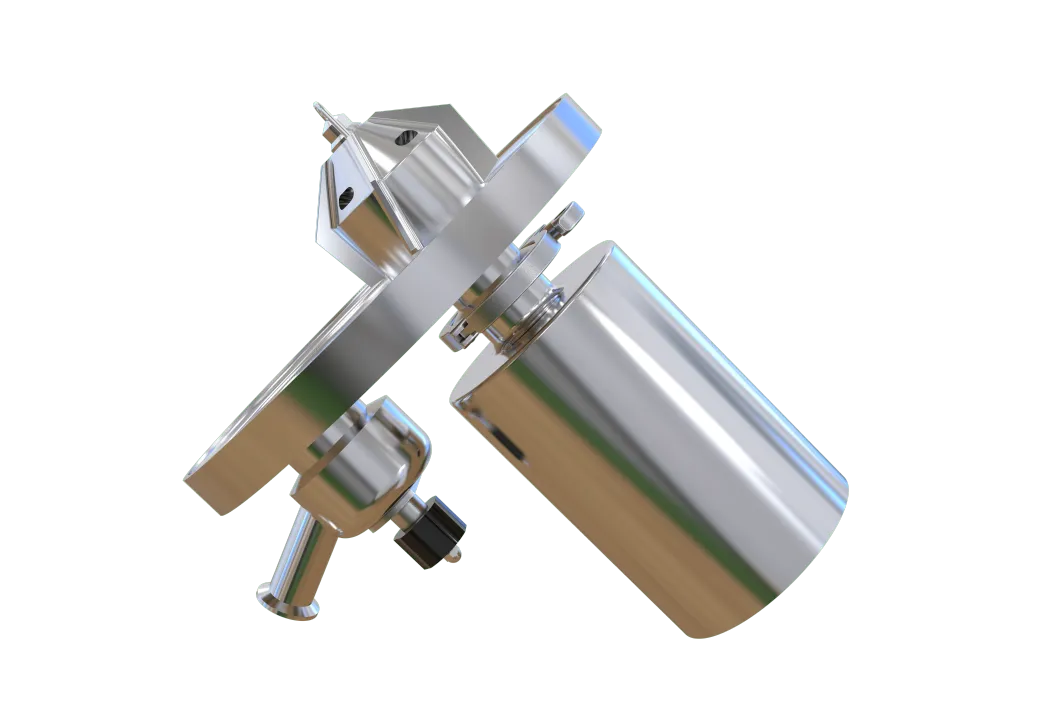
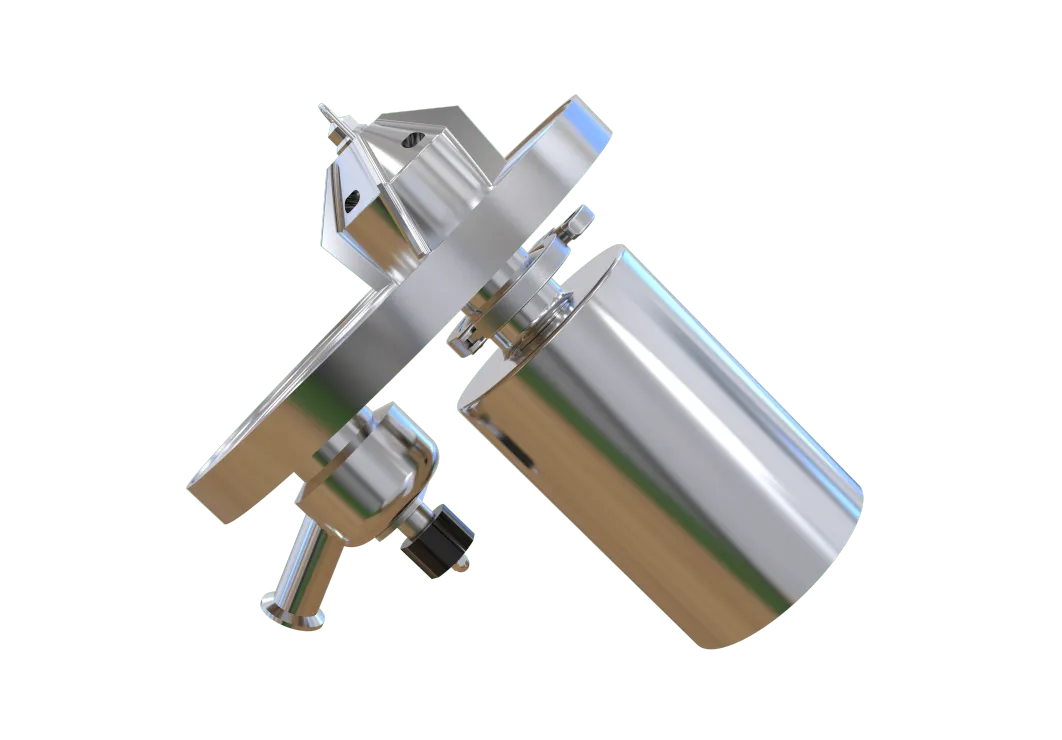
Structurally, the complete assembly consists of a high-efficiency hydrofoil mixing impeller, an integrated heavy-duty dish end, precision dynamic bearings, a hermetically sealed static isolation sleeve, an integrated flush-mounted tank-bottom valve, and a ruggedized motor housing adapter.
Fluid Dynamics: High-Shear Radial Dissolution
The system utilizes an engineered, bottom-driven vortex mechanics approach to achieve rapid, homogenous blending without compromising the integrity of the containment shell:
The Suction Phase: As the magnetic driver spins the internal impeller, it creates a powerful downward central vortex. This localized low-pressure zone rapidly pulls floating powders, dense crystals, or immiscible liquids down into the high-shear core of the blades.
Radial Projection: Centrifugal forces accelerate the media outward from the impeller's outer diameter. The fluid is projected radially at high velocity toward the lower curved walls of the dish end.
The Axial Loop: Upon striking the vessel walls, the kinetic energy transforms into an upward axial flow, driving the fluid up the sides of the tank. As energy dissipates near the surface, the liquid is drawn back down into the central vortex.
This continuous, highly turbulent loop achieves rapid macro-mixing, blending, dissolution, and particle dispersion across the entire batch—all while keeping the fluid completely isolated behind a solid, seal-less metallic barrier.
Target Industry Applications
This integrated mixing solution is purpose-built for small-to-medium diameter processing tanks, reaction vessels, and fermentation equipment where cross-contamination is an absolute dealbreaker:
• Biopharmaceuticals: Sterile buffer preparation, plasma fractionation, media preparation, vaccine formulation, and monoclonal antibody holding tanks.
• Advanced Food & Beverage: Infant formula blending, liquid vitamin fortifying, flavor emulsion suspension, and dairy enzyme processing.
• Cosmetics & Personal Care: High-end skincare lotions, sterile ophthalmic solutions, and topical gel blending.
• Pilot Plants & R&D Labs: Modular benchtop reactors, scaling systems, and critical pilot-scale fermentation skids.

Description
In high-purity industries such as biopharmaceuticals, vaccine formulation, functional food processing, and laboratory research, achieving absolute sterility and maximum product recovery is an ongoing engineering challenge. Conventional vessel designs, which treat mixing systems and discharge mechanisms as separate components, frequently suffer from localized fluid stagnation, batch-to-batch cross-contamination, and expensive product loss.
Our Integrated Integrated Bottom-Entry Magnetic Stirrer redefines sanitary fluid handling. By engineering the isolation sleeve, the vessel bottom dish end, and the flush tank-bottom discharge valve into a single, seamless, monolithic block, this advanced process solution eliminates stagnant zones entirely, delivering true zero-dead-leg performance and complete product drainage.
The Engineering Challenge
Traditional sanitary vessel fabrication requires engineers to source the magnetic stirrer and the bottom outlet valve from different suppliers. This fragmented approach introduces multiple technical vulnerabilities into the production line:
• The Trap of Weld Seams: Welding separate ports and valve housings onto a dish end creates microscopic crevices and heat-affected zones (HAZ). Over time, these areas become highly susceptible to rouging, pitting corrosion, and bacterial biofilm accumulation.
• Inefficient Clean-in-Place (CIP) Cycles: Standard configurations inevitably create "dead legs"—areas where fluid velocity drops to near zero during rinsing. As a result, cleaning validation becomes incredibly difficult, requiring prolonged CIP cycles, excessive chemical consumption, and validation failures.
• Mechanical and Thermal Stress: Onsite welding causes localized thermal deformation. Even minor warpage in the bottom dish can misalign the drive axis of a magnetic mixer, leading to premature bearing wear and catastrophic decoupling during operation.
Our integrated architecture bypasses these risks by delivering a factory-machined, pre-aligned assembly that replaces multiple field welds with a single, high-precision sanitary interface.
Key Design Advantages
Zero Residue and Absolute Drainability
The core philosophy of this design is the total elimination of dead space. The containment shell of the magnetic drive is embedded directly alongside the seating of the tank bottom valve. When the discharge valve is actuated, the fluid path is completely unobstructed. Every drop of your high-value batch drains out cleanly, leaving no residual puddle at the bottom of the vessel. This maximizes yield per batch and shortens the turnaround time between production campaigns.
Radical Space Optimization
Modern cleanrooms, pilot plants, and modular bioprocess skids operate under tight spatial constraints. Standard bottom-driven mixers with adjacent valves require significant under-tank clearance, forcing tanks to be mounted on tall, heavy legs. The ultra-compact, low-profile layout of the integrated mixer minimizes the total envelope dimensions underneath the vessel. This gives maintenance personnel better access, simplifies piping tie-ins, and allows for a lower overall facility profile.
Streamlined Tank Fabrication
For tank manufacturers and OEMs, this unit eliminates the complex tasks of manual layout, cutting, fitting, and multi-pass welding of separate components. Because the dish end and valve housing are pre-integrated and CNC-machined, the risk of weld-induced warpage is completely removed. This ensures perfect concentricity between the magnetic drive and the vessel centerline from day one.
Material Science Engineered for Extreme Compliance
To withstand aggressive Clean-in-Place (CIP) chemicals, high-pressure Steam-in-Place (SIP) thermal cycling, and abrasive process media, every wetted component is fabricated from fully traceable, premium-grade materials:
• Product-Wetted Metallurgy: Available in premium SS316L or SS04 stainless steel. The surfaces undergo advanced mechanical polishing and optional electropolishing to achieve ultra-smooth finishes, drastically reducing protein binding and bacterial adhesion.
• Advanced Friction Couplings: The internal dynamic bearings are the heart of the mixer's reliability. Customers can select between Silicon Carbide (SiC) or Tungsten Carbide (Hard Alloy). These advanced technical ceramics exhibit exceptional hardness, near-zero friction coefficients, outstanding thermal shock resistance, and zero particle shedding, ensuring they will not contaminate sterile batches.
Structurally, the complete assembly consists of a high-efficiency hydrofoil mixing impeller, an integrated heavy-duty dish end, precision dynamic bearings, a hermetically sealed static isolation sleeve, an integrated flush-mounted tank-bottom valve, and a ruggedized motor housing adapter.
Fluid Dynamics: High-Shear Radial Dissolution
The system utilizes an engineered, bottom-driven vortex mechanics approach to achieve rapid, homogenous blending without compromising the integrity of the containment shell:
The Suction Phase: As the magnetic driver spins the internal impeller, it creates a powerful downward central vortex. This localized low-pressure zone rapidly pulls floating powders, dense crystals, or immiscible liquids down into the high-shear core of the blades.
Radial Projection: Centrifugal forces accelerate the media outward from the impeller's outer diameter. The fluid is projected radially at high velocity toward the lower curved walls of the dish end.
The Axial Loop: Upon striking the vessel walls, the kinetic energy transforms into an upward axial flow, driving the fluid up the sides of the tank. As energy dissipates near the surface, the liquid is drawn back down into the central vortex.
This continuous, highly turbulent loop achieves rapid macro-mixing, blending, dissolution, and particle dispersion across the entire batch—all while keeping the fluid completely isolated behind a solid, seal-less metallic barrier.
Target Industry Applications
This integrated mixing solution is purpose-built for small-to-medium diameter processing tanks, reaction vessels, and fermentation equipment where cross-contamination is an absolute dealbreaker:
• Biopharmaceuticals: Sterile buffer preparation, plasma fractionation, media preparation, vaccine formulation, and monoclonal antibody holding tanks.
• Advanced Food & Beverage: Infant formula blending, liquid vitamin fortifying, flavor emulsion suspension, and dairy enzyme processing.
• Cosmetics & Personal Care: High-end skincare lotions, sterile ophthalmic solutions, and topical gel blending.
• Pilot Plants & R&D Labs: Modular benchtop reactors, scaling systems, and critical pilot-scale fermentation skids.
Application


Specifications
| Model | YCJ051-6-0.4 Servo 400-L | YCJ051-8-0.4 Servo 400-L | YCJ052-10-0.4 Servo 400-L | YCJ052-12-0.4 Servo 400-L | YCJ052-14-0.4 Servo 400-L | YCJ053-16-0.4 Servo 400-L | |
|---|---|---|---|---|---|---|---|
| Head Size | ID159*3 | ID200*3 | ID250*4 | ID300*4 | ID350*5 | ID400*6 | |
| Discharge Valve Specification | 0.5\ | 0.5\ | 0.75\ | 0.75\ | 0.75\ | 1\" | |
| Working Pressur | 0.3 | 0.3 | 0.3 | 0.3 | 0.3 | 0.3 | MPa |
| Power | 0.4/220V\t | 0.4/220V\t | 0.4/220V\t | 0.4/220V\t | 0.4/220V\t | 0.4/220V\t | |
| Rotational Speed | 0-400 | 0-400 | 0-400 | 0-400 | 0-400 | 0-400 |
Advantage Comparison


GET IN TOUCH NOW


