


In biopharmaceutical manufacturing, buffer and media preparation tanks perform essential supporting functions. Buffers are used to establish and maintain the required chemical conditions during different processing stages, while culture media provide nutrients for cell growth and microbial cultivation. Both require reliable preparation before the solutions can be used in production.
When selecting mixing equipment, the initial purchase price is only one part of the overall cost. Maintenance requirements, seal replacement, cleaning procedures, downtime, and the practical demands of equipment installation can all affect the cost of operating a preparation tank over its service life.
A conventional agitator with a rotating shaft passing through the vessel requires a suitable shaft-sealing arrangement. Depending on the design and operating conditions, this can introduce additional inspection and maintenance requirements. For facilities operating multiple preparation vessels or running frequent batches, these recurring tasks deserve consideration during equipment selection.
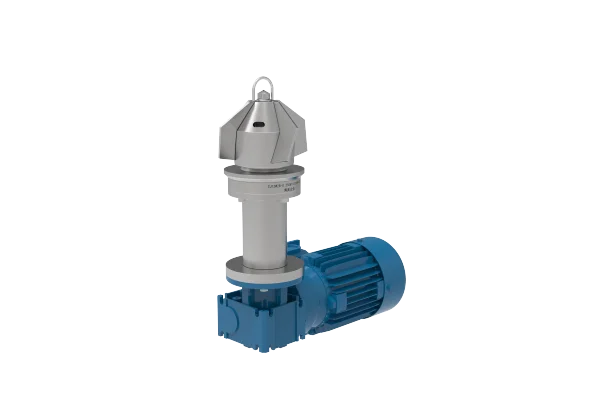
A standard bottom magnetic mixer offers an alternative configuration. Its magnetic coupling transfers torque to the internal impeller without requiring a conventional rotating shaft seal at the vessel penetration. For buffer and media preparation tanks, this design can simplify the dynamic sealing arrangement while providing the circulation needed for routine mixing operations.
The economic value comes from evaluating the complete equipment configuration and its expected maintenance demands, rather than assuming that one mixer design will always be the least expensive option.
Where Bottom Magnetic Mixers Fit in Bioprocessing
Buffer and media preparation involve different formulations, but both depend on adequate circulation and consistent ingredient distribution. A standard bottom magnetic mixer can serve these duties when its design and operating range match the process requirements.
Buffer Preparation Tanks
Buffer solutions may contain phosphate, citrate, acetate, salts, and other components that must be dissolved and distributed according to a defined formulation. During preparation, inadequate circulation can leave undissolved solids near the vessel bottom or delay the distribution of concentrated ingredients.
A bottom-entry impeller generates movement from the lower part of the tank, helping circulate the liquid and bring dissolved or suspended material into contact with the surrounding solution. This can support the preparation of both routine buffer solutions and concentrated stock solutions.
The required mixing conditions depend on salt solubility, target concentration, viscosity, powder addition rate, and vessel geometry. A mixer should be selected for the actual formulation rather than solely by the nominal tank volume. Complete dissolution and final buffer specifications must still be confirmed through the established preparation procedure.
Culture Media Preparation Tanks
Culture media may contain sugars, amino acids, mineral salts, vitamins, and other nutrients. Some components dissolve readily, while others require a controlled addition sequence or additional mixing time.
A suitably selected bottom magnetic mixer helps distribute these ingredients throughout the vessel and maintain circulation during preparation. For formulations containing poorly soluble ingredients, the impeller and operating conditions must provide sufficient movement without exceeding the process requirements.
Media preparation also requires attention to the sensitivity of individual components. Not every ingredient should be exposed to the same temperature or processing conditions, and some components may need to be added after a heating or sterilization step. Mixing equipment should support the defined procedure rather than dictate a single preparation method for every media formulation.
How the Standard Magnetic Drive Design Can Help Manage Costs
Fewer Dynamic Sealing Components at the Mixer Penetration
A standard bottom magnetic mixer transmits torque through magnetic coupling. The internal rotor is driven magnetically by the external drive, so a conventional rotating shaft does not need to pass through the vessel boundary.
This removes the conventional mechanical shaft seal associated with that penetration. Depending on the alternative agitator design being considered, the arrangement may reduce the number of dynamic sealing components that require inspection or replacement.
For facilities operating several preparation tanks, this can simplify one aspect of routine maintenance planning. However, the overall maintenance burden still depends on the internal bearing arrangement, drive components, process medium, operating hours, and manufacturer-recommended service intervals. Static seals and other vessel connections also remain part of the equipment's sealing system.
Maintenance Planning and Production Availability
Maintenance costs include more than replacement parts. Inspection work, technician time, production scheduling, and the consequences of taking a preparation vessel out of service can also affect operating expenditure.
By removing the conventional shaft seal at the mixer penetration, a bottom magnetic mixer can reduce maintenance tasks associated with that particular component. This may be useful where buffer and media preparation vessels operate frequently or where access to the agitator assembly is inconvenient.
Nevertheless, a magnetic mixer is not maintenance-free. Bearings, drive components, and other parts still require attention according to their design and operating conditions. A realistic cost assessment should compare the expected service requirements of the complete mixer assemblies rather than treating the absence of a conventional shaft seal as proof of lower total cost in every application.
Hygienic Design and Cleaning Requirements
Biopharmaceutical preparation equipment must be compatible with the facility's cleaning procedures and contamination-control requirements. Residual buffer salts, media ingredients, or other process materials can create cleaning challenges if they accumulate in areas that are difficult to access or drain.
The bottom magnetic mixer's drive arrangement can simplify the dynamic sealing configuration, but cleanability depends on the entire wetted assembly. Surface finish, material compatibility, bearing design, impeller geometry, tank drainage, and the selected cleaning procedure all matter.
Where clean-in-place (CIP) is required, the cleaning cycle must provide adequate coverage and removal of residues from the vessel and mixer. The mixer design should be evaluated as part of the cleaning assessment, rather than assuming that magnetic coupling alone guarantees effective cleaning or sterile operation.
Choosing the Right Mixer for Buffer and Media Preparation
Cost-efficient equipment selection starts with a clear understanding of the duty. A mixer intended for a low-viscosity buffer may not be suitable for a concentrated formulation with a high solids loading. Similarly, media containing components with different dissolution characteristics may require a more carefully controlled addition and mixing procedure.
Several factors should guide the selection.
Working volume and tank geometry. The mixer should provide suitable circulation at the normal operating volume, including any defined minimum batch level. Tank diameter, bottom shape, impeller position, and liquid height all influence the resulting flow pattern.
Viscosity and solids content. These properties affect the resistance to flow and the movement of material through the vessel. Concentrated buffers or media formulations containing suspended solids may require different mixing conditions from simple aqueous solutions.
Materials and operating compatibility. Wetted materials and sealing components must be compatible with the formulation, cleaning agents, and operating temperature. The internal bearing design and operating limits should also be confirmed for the intended duty.
Maintenance access and service requirements. The installation should allow the required inspection and servicing to be performed safely and efficiently. Service intervals, spare-part availability, and the manufacturer's maintenance guidance should be included in the equipment evaluation.
These considerations help prevent a common source of unnecessary expense: selecting equipment with a low initial price that does not adequately match the actual process or requires avoidable modifications after installation.
Evaluating Total Cost of Ownership
A meaningful comparison between mixing options should consider the costs incurred over the equipment's expected operating life.
The initial equipment and installation costs establish the starting point. Routine maintenance, replacement parts, cleaning-related requirements, energy consumption, and any downtime associated with servicing contribute to the longer-term cost. The relative importance of each item depends on the number of batches processed, operating hours, maintenance strategy, and the consequences of equipment unavailability.
For example, if a facility operates multiple buffer preparation tanks on a frequent schedule, reducing the maintenance burden associated with dynamic shaft sealing may have practical value. In a facility with infrequent mixing duties or a simple maintenance arrangement, the difference may be less significant.
Energy consumption should also be assessed using the actual operating duty. A magnetic drive does not automatically consume less power than every conventional agitator. Power demand depends on the drive, impeller, liquid properties, operating speed, and process requirements.
The most useful comparison is therefore based on the complete equipment specification and realistic service assumptions. This approach allows engineering and procurement teams to judge whether a standard bottom magnetic mixer offers a financial advantage for their particular preparation duties.
Building a Practical Bioprocessing Equipment Strategy
Buffer and media preparation tanks need mixing equipment that can deliver consistent circulation while meeting the facility's hygiene, maintenance, and operating requirements. A standard bottom magnetic mixer provides a bottom-entry configuration with magnetic torque transmission and no conventional rotating shaft seal at the mixer penetration.
These characteristics can simplify the dynamic sealing arrangement and may reduce maintenance associated with that component. When the mixer is appropriately selected for the formulation, working volume, and cleaning procedure, it can support reliable preparation of buffers and culture media without adding unnecessary equipment complexity.
For biopharmaceutical facilities, cost efficiency is ultimately a balance between purchase price, process suitability, maintenance demands, and long-term availability. Evaluating the complete mixing duty and total cost of ownership provides a sounder basis for equipment selection than comparing initial prices alone.


