


Choosing the right magnetic stirrer O-ring is critical for preventing fluid leakage, maintaining process consistency, and extending overall equipment lifespan. As a seasoned manufacturer of premium magnetic mixing equipment—ranging from Sanitary Bottom-Mounted Magnetic Mixers to Top-Entry Magnetic Coupling Stirrers—we recognize that balancing long-term mechanical performance with operational cost control remains a top priority for procurement managers and process engineers alike. For routine laboratory mixing and standard industrial blending operations, deploying expensive, exotic elastomers is not always a technical necessity. NBR (Nitrile Butadiene Rubber) seals offer an unbeatable balance of reliable sealing integrity, high oil resistance, and superior economy for a wide variety of water and oil-based stirring applications.
Understanding the Technical Specifications and Operational Boundaries of Nitrile Matrices
To avoid costly mechanical downtime, unexpected seal failures, and premature fluid leaks, engineers must strictly respect the precise thermal and chemical boundaries of NBR materials within magnetic mixing systems. NBR is an industrial copolymer composed of butadiene and acrylonitrile. The specific ratio of these monomers directly dictates the chemical performance, oil resistance, and physical resilience of the final molded gasket. In our high-performance magnetic coupling stirrers, we select a medium-to-high acrylonitrile content formulation to ensure an optimal equilibrium between low-temperature elasticity and maximum hydrocarbon resistance. Higher acrylonitrile levels significantly enhance the matrix density, rendering the polymer backbone less susceptible to swelling when in direct contact with complex process fluids.
Process engineers should integrate specific operational thresholds directly into their automated process control loops to safeguard system integrity and prevent unexpected degradation of the nitrile seal. The Maximum Peak Temperature is established at 100 degrees Celsius. This elevated threshold is engineered strictly for short-term exposure, rapid thermal spikes, or brief system flushes. Prolonged continuous operation at this extreme limit accelerates polymer aging, cross-link hardening, and premature elastomeric embrittlement, which ultimately compromises the seal profile under high torque.
The Continuous Working Temperature Range must remain strictly below 70 degrees Celsius. This represents the scientifically recommended operational window for standard NBR during extended runs, ensuring that the gasket retains its full elastic memory, outward sealing force, and mechanical durometer over long processing periods. Within this stable range, the material is best suited for handling routine water-based solutions, aqueous laboratory buffers, mineral oils, industrial greases, hydraulic fluids, and various petroleum-derived products.
Conversely, the material is absolutely not suitable for processing environments involving strong polar solvents such as acetone or methyl ethyl ketone, environmental ozone, strong concentrated acids, or continuous high-temperature blending. Exposure to these incompatible fluids or environments results in rapid chemical degradation, severe volumetric swelling, or total structural failure of the sealing boundary.
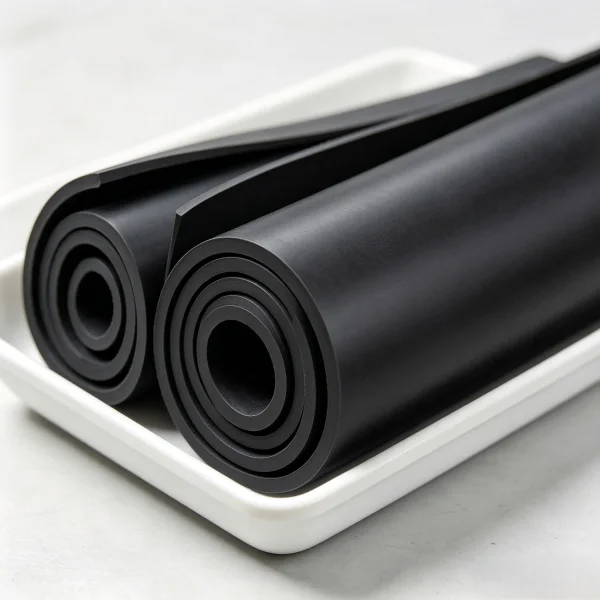
Why Choose NBR O-Rings for Your Magnetic Mixing Equipment?
Staying within the recommended less than 70 degrees Celsius operating window ensures that the NBR seal retains its complete elasticity, actively preventing common degradation, surface cracking, or loss of internal sealing pressure. Because of its cost-effective manufacturing profile and specialized molecular resilience, NBR delivers consistent performance across two primary industrial and laboratory mixing environments.
1. Water-Based Solutions and Aqueous Buffer Blending
For routine laboratory mixing, aqueous buffer preparations, and general liquid blending tasks, NBR serves as a highly dependable, leak-proof barrier. Under low-temperature, non-corrosive conditions, the mechanical properties of NBR—including its high tensile strength and excellent abrasion resistance—allow it to form a secure, hermetic seal against polished stainless steel or glass surfaces. It provides excellent mechanical sealing without breaking your operational budget, making it an excellent default choice for general research setups and bulk liquid processing where specialized chemical resistance is unnecessary. The material maintains a stable sealing interface that prevents atmospheric moisture from entering the vessel while retaining low dynamic friction properties during operation.
2. Petroleum, Lubricants, and Mineral Oil Formulations
NBR exhibits exceptional inherent resistance to non-polar hydrocarbons, oils, industrial greases, and heavy hydraulic fluids. Unlike other common elastomers that soften, swell, and disintegrate when exposed to petroleum products, the nitrile polymer matrix remains highly stable. This specialized resistance makes NBR the ideal material choice when testing lubricants, blending fuel additives, or running oil-based formulations on your industrial top-entry magnetic coupling stirrers, ensuring complete containment of hazardous or viscous fluids. The low permeation rate of nitrile rubber against mineral oils prevents volatile organic compounds from vaporizing through the flange junctions, which maintains strict environmental safety compliance across the entire manufacturing plant floor.
Advanced Engineering Customization for Specific Agitator Geometries
Integrating the NBR elastomer into the specific physical geometry of the magnetic mixer is critical to ensure zero-leakage performance over extended operation. In complex systems like Sanitary Bottom-Mounted Magnetic Mixers and Top-Entry Magnetic Coupling Stirrers, the seal configuration must withstand static clamping torque as well as dynamic pressure variations caused by fluid vortexing and high-velocity impellers. Each mounting point features specific torque requirements designed to ensure optimum compression without over-stressing the rubber compound.
For Sanitary Bottom-Mounted Magnetic Mixers, where the impeller head is constantly submerged in the process fluid, the NBR gasket must be precision-molded to fit seamlessly within the mounting flange. Any physical variation or manufacturing imperfection can cause localized stress concentrations, leading to a loss of sealing force. Our custom-engineered NBR gaskets are manufactured to tight tolerances to ensure uniform compression across the entire sealing surface, preventing fluid from bypassing the isolation barrier.
For Top-Entry Magnetic Coupling Stirrers, which are frequently used in closed, pressurized vessels, the NBR compound is selected with an optimized durometer rating, typically between seventy and seventy-five Shore A. This specific hardness allows the seal to resist mechanical extrusion into the clearance gaps under positive vessel pressure while maintaining a robust, low-friction static seal around the upper magnetic housing drive line. By managing the surface finish of the metal landing components, we further reduce the localized friction coefficient, extending the physical lifecycle of the elastomer matrix during intensive mixing schedules.
Upgrade Your Mixing Operations with the Right Seal Selection
For the vast majority of mild, low-temperature water and oil stirring tasks, selecting NBR is your most economical and reliable choice. We offer NBR seals as a standard, cost-conscious option for global buyers who demand high operational performance and absolute process containment without unnecessary material expenses. By aligning your chemical and thermal requirements with the verified performance capabilities of Nitrile rubber, you can optimize your laboratory or production floor for maximum efficiency, safety, and longevity. Our engineering team provides complete material certification data to ensure full compliance with standard mechanical operations, helping you maintain continuous processing uptime with minimal maintenance costs.


