


SFM Externally Mounted Magnetic Stirrer


In high-purity manufacturing ecosystems such as biopharmaceuticals, sterile liquid formulations, cell culture preparations, and ultra-pure fine chemicals, preventing micro-contamination is the ultimate priority. Even a microscopic foreign particle or a trace droplet of mechanical lubricant can invalidate an entire production batch, resulting in massive financial losses and severe regulatory setbacks. For years, engineers relied on standard top-entering magnetic stirrers to eliminate shaft leakage. However, early generations of these stirrers contained a hidden compromise within their internal support frameworks: the reliance on conventional rolling ball bearings.
Traditional metal ball bearings require continuous industrial lubrication and feature intricate physical cages that generate metallic micro-particles under continuous friction. To eliminate these critical contamination vectors, the SFM Externally Mounted Magnetic Stirrerintroduces a profound technological leap. By replacing legacy oiled ball bearings with premium technical ceramic bearings and engineering a highly optimized, low-profile overhead drive structure, the SFM series delivers a pristine, high-performance fluid blending solution that aligns perfectly with global GMP and FDA sanitary standards.
The Engineering Evolution: Technical Ceramic Bearings vs. Legacy Ball Bearings
The most impactful engineering breakthrough of the SFM series is located within the product-contact zone, where traditional rolling ball bearings have been completely eliminated. Standard steel or stainless steel bearings depend on specialized greases or synthetic oils to prevent thermal lockup and mechanical binding. In a top-entering agitator setup, there is always a residual risk that these lubricants might break down, vaporize, or migrate downwards into the product matrix. Furthermore, the complex, multi-component cages of rolling bearings create tight physical crevices that act as sanitary dead zones, trapping product residues and sheltering bacterial growth.
The SFM model addresses this by utilizing heavy-duty bearings crafted from high-density, engineering-grade technical ceramics. These advanced ceramic components possess an extraordinarily smooth, non-porous surface and an incredibly low natural coefficient of friction. Because they operate flawlessly in a completely dry state without requiring a single drop of lubricating oil, the risk of chemical or hydrocarbon oil contamination is permanently reduced to zero.
In addition, the extreme surface hardness of technical ceramics drastically limits mechanical wear. Unlike metal-on-metal bearing assemblies that gradually shed microscopic metallic dust under high-speed rotations, ceramic bearings maintain their precise geometric tolerances over long operational lifecycles. This guarantees that your sensitive high-purity liquids remain entirely free of particulate shedding and black-spot contamination.
Optimized External Profile and Overhead Space Maximization
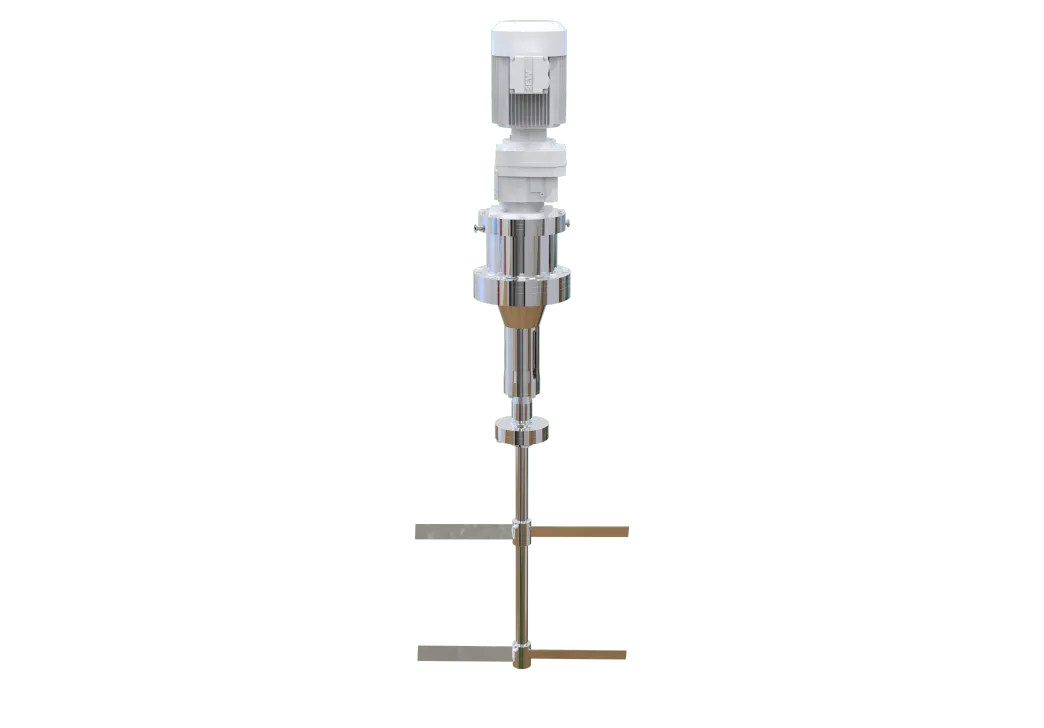
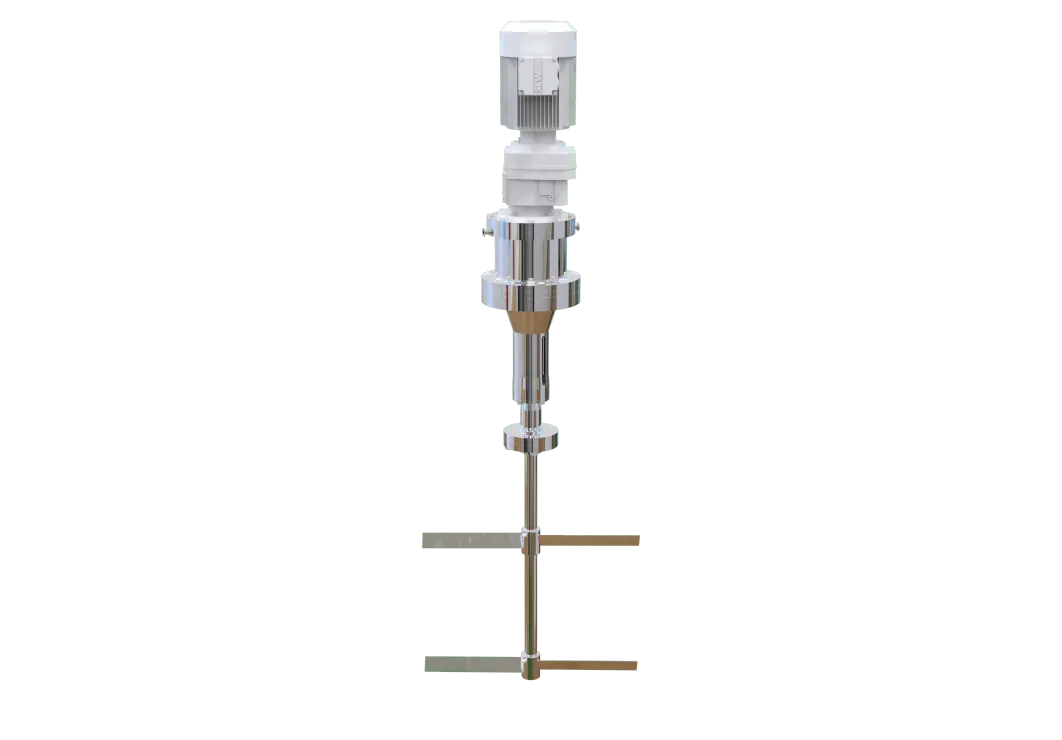
As an externally mounted magnetic coupling system, the SFM series positions its electric motor, gear speed reducer, and outer magnetic drive package securely on top of the reactor dome. However, unlike bulky, legacy top-entry mixers that require massive overhead scaffolding and extensive vertical clearance, the SFM series introduces a heavily streamlined structural footprint.
The engineering team carefully reconfigured the vertical alignment between the driving motor shaft and the outer magnetic rotor assembly. By eliminating unnecessary structural adapters, this compact layout lowers the center of gravity of the entire mixing drive. This reduction in overhead leverage drastically minimizes operational vibrations that can stress vessel nozzles and cause premature fatigue on tank welds. For facilities operating within tightly confined cleanroom spaces, double-deck processing platforms, or inside compact isolation booths, the reduced physical volume of the SFM drive head frees up valuable clearance. This allows plant engineers to easily integrate vital auxiliary piping, analytical sensors, and ingredient addition lines around the top dome of the vessel without structural interference.
Uncompromised Integration with CIP and SIP Automated Workflows
Modern sterile processing facilities depend on automated Clean-in-Place (CIP) and Sterilize-in-Place (SIP) cycles to achieve reliable, repeatable sanitation validation without the costly need to dismantle equipment. Traditional top-entering mixers frequently fail these stringent validation protocols because their internal bearing housings trap stagnant fluids and shield surfaces from thermal steam penetration.
The SFM magnetic stirrer is engineered from the ground up for total compliance with automated CIP and SIP workflows. Every internal shaft shoulder, keyway, and product-contact joint features specialized, high-performance sanitary contours. These smooth transitions eliminate blind micro-crevices, ensuring that there are no stagnant pockets where product residues can accumulate.
During an automated CIP cycle, cleaning validation liquids can pass freely across the exposed ceramic bearing surfaces, lifting and flushing away all trace materials. When the Sterilize-in-Place cycle begins, the high-purity ceramic material easily withstands the thermal shock of saturated steam sterilization. This specialized thermal resilience allows processing plants to complete rapid turnaround times between product batches while consistently maintaining a fully validated sterile state.
Advanced Operational Features for Global Production Lines
• Hermetic Static Sealing: High-energy permanent magnets transfer full rotational torque through a solid, un-penetrated stainless steel isolation sleeve. This setup transforms potential dynamic leakage paths into an absolute static barrier, making the vessel perfectly suited for handling highly volatile or toxic materials under deep vacuum.
• Elimination of Thrust Friction: The internal layout of the SFM series ensures that there is no direct axial mechanical friction pushing downwards onto a thrust bearing surface; the shaft experiences only balanced radial guidance. This suppresses localized heat generation, protecting heat-sensitive biological cultures or proteins from thermal degradation.
• Smart Overload Disconnection: The non-contact magnetic coupling serves as an integrated mechanical safety fuse. If fluid viscosity climbs beyond design limits or if an un-dissolved solid block jams the impeller, the magnetic fields slip smoothly. This safety decoupling instantly stops torque transmission, protecting the motor from electrical overcurrent and saving the mixing shaft from structural twisting.
By adopting the SFM ceramic-bearing externally mounted magnetic stirrer, modern processing facilities can confidently remove mechanical contamination risks, optimize their valuable cleanroom real estate, and elevate their production lines to the highest global tier of quality control.

Description
In high-purity manufacturing ecosystems such as biopharmaceuticals, sterile liquid formulations, cell culture preparations, and ultra-pure fine chemicals, preventing micro-contamination is the ultimate priority. Even a microscopic foreign particle or a trace droplet of mechanical lubricant can invalidate an entire production batch, resulting in massive financial losses and severe regulatory setbacks. For years, engineers relied on standard top-entering magnetic stirrers to eliminate shaft leakage. However, early generations of these stirrers contained a hidden compromise within their internal support frameworks: the reliance on conventional rolling ball bearings.
Traditional metal ball bearings require continuous industrial lubrication and feature intricate physical cages that generate metallic micro-particles under continuous friction. To eliminate these critical contamination vectors, the SFM Externally Mounted Magnetic Stirrerintroduces a profound technological leap. By replacing legacy oiled ball bearings with premium technical ceramic bearings and engineering a highly optimized, low-profile overhead drive structure, the SFM series delivers a pristine, high-performance fluid blending solution that aligns perfectly with global GMP and FDA sanitary standards.
The Engineering Evolution: Technical Ceramic Bearings vs. Legacy Ball Bearings
The most impactful engineering breakthrough of the SFM series is located within the product-contact zone, where traditional rolling ball bearings have been completely eliminated. Standard steel or stainless steel bearings depend on specialized greases or synthetic oils to prevent thermal lockup and mechanical binding. In a top-entering agitator setup, there is always a residual risk that these lubricants might break down, vaporize, or migrate downwards into the product matrix. Furthermore, the complex, multi-component cages of rolling bearings create tight physical crevices that act as sanitary dead zones, trapping product residues and sheltering bacterial growth.
The SFM model addresses this by utilizing heavy-duty bearings crafted from high-density, engineering-grade technical ceramics. These advanced ceramic components possess an extraordinarily smooth, non-porous surface and an incredibly low natural coefficient of friction. Because they operate flawlessly in a completely dry state without requiring a single drop of lubricating oil, the risk of chemical or hydrocarbon oil contamination is permanently reduced to zero.
In addition, the extreme surface hardness of technical ceramics drastically limits mechanical wear. Unlike metal-on-metal bearing assemblies that gradually shed microscopic metallic dust under high-speed rotations, ceramic bearings maintain their precise geometric tolerances over long operational lifecycles. This guarantees that your sensitive high-purity liquids remain entirely free of particulate shedding and black-spot contamination.
Optimized External Profile and Overhead Space Maximization
As an externally mounted magnetic coupling system, the SFM series positions its electric motor, gear speed reducer, and outer magnetic drive package securely on top of the reactor dome. However, unlike bulky, legacy top-entry mixers that require massive overhead scaffolding and extensive vertical clearance, the SFM series introduces a heavily streamlined structural footprint.
The engineering team carefully reconfigured the vertical alignment between the driving motor shaft and the outer magnetic rotor assembly. By eliminating unnecessary structural adapters, this compact layout lowers the center of gravity of the entire mixing drive. This reduction in overhead leverage drastically minimizes operational vibrations that can stress vessel nozzles and cause premature fatigue on tank welds. For facilities operating within tightly confined cleanroom spaces, double-deck processing platforms, or inside compact isolation booths, the reduced physical volume of the SFM drive head frees up valuable clearance. This allows plant engineers to easily integrate vital auxiliary piping, analytical sensors, and ingredient addition lines around the top dome of the vessel without structural interference.
Uncompromised Integration with CIP and SIP Automated Workflows
Modern sterile processing facilities depend on automated Clean-in-Place (CIP) and Sterilize-in-Place (SIP) cycles to achieve reliable, repeatable sanitation validation without the costly need to dismantle equipment. Traditional top-entering mixers frequently fail these stringent validation protocols because their internal bearing housings trap stagnant fluids and shield surfaces from thermal steam penetration.
The SFM magnetic stirrer is engineered from the ground up for total compliance with automated CIP and SIP workflows. Every internal shaft shoulder, keyway, and product-contact joint features specialized, high-performance sanitary contours. These smooth transitions eliminate blind micro-crevices, ensuring that there are no stagnant pockets where product residues can accumulate.
During an automated CIP cycle, cleaning validation liquids can pass freely across the exposed ceramic bearing surfaces, lifting and flushing away all trace materials. When the Sterilize-in-Place cycle begins, the high-purity ceramic material easily withstands the thermal shock of saturated steam sterilization. This specialized thermal resilience allows processing plants to complete rapid turnaround times between product batches while consistently maintaining a fully validated sterile state.
Advanced Operational Features for Global Production Lines
• Hermetic Static Sealing: High-energy permanent magnets transfer full rotational torque through a solid, un-penetrated stainless steel isolation sleeve. This setup transforms potential dynamic leakage paths into an absolute static barrier, making the vessel perfectly suited for handling highly volatile or toxic materials under deep vacuum.
• Elimination of Thrust Friction: The internal layout of the SFM series ensures that there is no direct axial mechanical friction pushing downwards onto a thrust bearing surface; the shaft experiences only balanced radial guidance. This suppresses localized heat generation, protecting heat-sensitive biological cultures or proteins from thermal degradation.
• Smart Overload Disconnection: The non-contact magnetic coupling serves as an integrated mechanical safety fuse. If fluid viscosity climbs beyond design limits or if an un-dissolved solid block jams the impeller, the magnetic fields slip smoothly. This safety decoupling instantly stops torque transmission, protecting the motor from electrical overcurrent and saving the mixing shaft from structural twisting.
By adopting the SFM ceramic-bearing externally mounted magnetic stirrer, modern processing facilities can confidently remove mechanical contamination risks, optimize their valuable cleanroom real estate, and elevate their production lines to the highest global tier of quality control.
Application


Specifications
Advantage Comparison


GET IN TOUCH NOW


