


In beverage production, a mixing vessel may handle sugar solutions, juice concentrates, flavor ingredients, dairy-based liquids, or other formulations that require consistent blending. Although these operations may appear straightforward, the reliability of the mixing equipment affects more than product uniformity. Seal wear, lubricant leakage, and unplanned maintenance can interrupt production, complicate cleaning, and increase operating costs.
Conventional agitators commonly use a rotating shaft that passes through the vessel wall or bottom. The shaft penetration requires a sealing arrangement to prevent process liquid from escaping and to limit contamination risks. Over time, friction, pressure changes, temperature fluctuations, and repeated cleaning cycles can increase the maintenance demands placed on this seal.
A bottom magnetic mixer offers another approach. It transfers torque magnetically to an impeller inside the vessel, eliminating the conventional rotating shaft seal at the mixer-to-vessel penetration. For beverage processors, this structural difference can reduce one recurring source of maintenance while supporting a more hygienic vessel design.
How Magnetic Drive Simplifies Shaft Sealing
In a conventional bottom-entry agitator, the rotating shaft crosses the vessel boundary. Mechanical seals or other shaft-sealing components must maintain separation between the product and the surrounding environment while accommodating rotation and operating conditions.
A bottom magnetic mixer uses a drive magnet and an internal driven magnet to transmit rotation through a stationary isolation barrier. The internal impeller turns without a conventional rotating shaft passing through the vessel boundary. This removes the need for a dynamic shaft seal at that location.
The practical benefit is a simpler sealing arrangement around the mixing drive. There are fewer shaft-seal wear issues to manage at the vessel penetration, and maintenance teams may spend less time inspecting, adjusting, or replacing components associated with that seal.
This does not mean the entire mixer is maintenance-free. Bearings, magnetic components, the drive unit, and other parts still require maintenance in accordance with the equipment design and operating conditions. However, removing the conventional shaft-seal interface can help reduce the number of potential failure points associated with the vessel boundary.
Reducing Leakage Risks in Beverage Vessels
Leakage risks in beverage equipment should be considered in two separate categories: product leakage through the mixing shaft seal and lubricant leakage from the drive assembly.
Product leakage at the shaft penetration can occur when a conventional seal wears, is installed incorrectly, or operates outside its intended conditions. A magnetic drive avoids the conventional rotating shaft penetration, reducing this particular leakage pathway. This can be especially useful where vessels handle sticky syrups, concentrated ingredients, or liquids that make cleaning around a leaking seal difficult.
Lubricant leakage from the drive assembly is a different issue. A magnetic coupling does not automatically eliminate lubricating oil from a gearbox or other drive components. If the mixer uses a lubricated gearbox, its housing, seals, and maintenance requirements still need to be considered. The equipment layout should also make it practical to inspect the drive assembly and identify any leakage before it affects nearby production areas.
For beverage plants, the appropriate objective is therefore not to assume that magnetic drive guarantees zero leakage. It is to remove the conventional shaft-seal leakage point where the design allows and to manage the remaining drive-related risks through suitable equipment selection, installation, and maintenance.
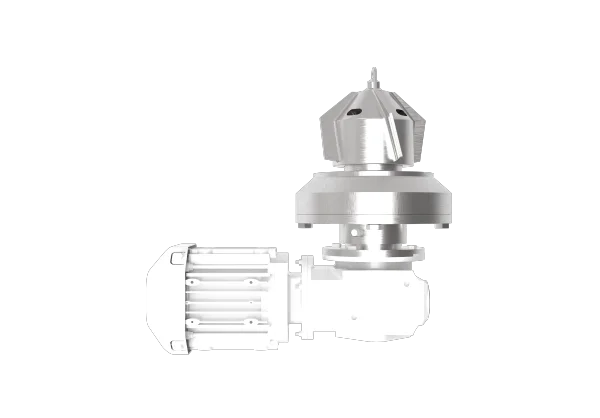
How Lower Maintenance Requirements Affect Operating Costs
Maintenance expenses are not limited to the price of replacement parts. A seal failure may require stopping the mixer, isolating the vessel, draining or transferring the product, carrying out repairs, and cleaning the affected area before processing can resume. Depending on the product and production schedule, these activities may create additional labor requirements and production losses.
By eliminating the conventional rotating shaft seal at the vessel penetration, a bottom magnetic mixer can reduce maintenance associated with that component. The potential cost benefits include:
- Fewer shaft-seal replacement tasks: Maintenance teams have one less dynamic sealing component at the vessel boundary to service.
- Less disruption from seal-related failures: Removing this failure point can lower the likelihood of shutdowns specifically caused by conventional shaft-seal wear.
- Simplified cleaning around the mixer penetration: The absence of a rotating shaft seal can make the vessel boundary easier to manage hygienically.
- Reduced risk of product loss from shaft-seal leakage: Avoiding this leakage pathway can help prevent losses and cleanup work associated with seal failure.
The actual savings depend on operating hours, liquid properties, cleaning procedures, drive configuration, and the maintenance history of the existing equipment. A meaningful cost assessment should compare the expected service requirements and downtime of the complete mixer assemblies rather than considering the purchase price alone.
Hygienic Design for Beverage Processing Equipment
Lower maintenance requirements are most valuable when they support the hygiene needs of beverage production. Sugar-rich liquids can leave sticky residues, while dairy beverages and juice formulations may require carefully controlled cleaning to prevent product carryover. Equipment surfaces and vessel connections should therefore be designed to suit the product and the plant's cleaning procedures.
A bottom magnetic mixer can help simplify the vessel boundary by removing the conventional rotating shaft penetration. Nevertheless, hygienic performance also depends on the internal impeller design, surface finish, weld quality, drainability, and the accessibility of product-contact areas. The mixer should be compatible with the intended cleaning-in-place (CIP) procedure where CIP is used; magnetic drive alone does not establish CIP or sterilization capability.
Material selection is equally important. Stainless steel grades, seals, and other wetted components should be suitable for the beverage formulation, cleaning chemicals, temperature range, and applicable food-processing requirements. These details influence service life as well as cleaning effectiveness.
Integrating Bottom Magnetic Mixers into Beverage Processing Systems
For a complete beverage processing solution, the mixer should be evaluated as part of the vessel and its supporting equipment rather than as an isolated component. Vessel geometry, working volume, liquid viscosity, impeller position, required mixing intensity, and operating speed all affect circulation and drive loading.
The drive arrangement also deserves attention. If reducing lubricant-related risks is a priority, the plant should review whether the selected configuration includes a gearbox, what lubrication it requires, and how the drive is positioned relative to the product area. A magnetic coupling addresses torque transmission across the vessel boundary; it does not replace the need to assess the drive assembly itself.
During equipment specification, processors should confirm the following points:
- The mixer can achieve the required circulation and blending performance at the intended working volume.
- Wetted materials and surface finishes suit the beverage and cleaning regime.
- The isolation barrier and magnetic coupling are appropriate for the operating conditions.
- The drive and any gearbox can be inspected and maintained without unnecessary disruption.
- The proposed vessel arrangement supports effective cleaning and practical maintenance access.
Reviewing these factors together helps prevent a design that reduces shaft-seal maintenance but introduces avoidable problems elsewhere in the system.
A More Manageable Approach to Beverage Vessel Maintenance
Bottom magnetic mixers provide a practical option for beverage processors seeking to reduce shaft-seal maintenance and manage leakage risks at mixing vessels. Their key structural advantage is the transmission of torque through a stationary isolation barrier, eliminating the conventional rotating shaft seal at the vessel penetration.
This can reduce maintenance work associated with that seal and help limit product leakage through the shaft interface. However, lubricant leakage from a gearbox or other drive components must be assessed separately, and the complete mixer still requires suitable inspection and servicing.
When specified as part of a hygienically designed beverage processing system, a bottom magnetic mixer can help simplify vessel maintenance while supporting reliable blending, effective cleaning, and more predictable equipment operation.


