


Magnetic bottom-entry mixers are widely used in applications where a closed vessel design and reliable liquid mixing are important. However, not all magnetic mixers use the same internal support structure. A conventional magnetic bottom mixer relies on magnetic coupling to drive the impeller, while a maglev bottom magnetic mixer adds a levitation mechanism designed to control the axial position of the internal magnetic assembly.
This difference affects more than the arrangement of internal components. It influences how axial forces are managed, how contact wear develops at specific interfaces, and what engineers should consider during installation and maintenance.
For equipment manufacturers and process engineers evaluating magnetic mixers for pharmaceutical, biopharmaceutical, and other high-purity applications, understanding this structural distinction helps determine whether a maglev design offers a meaningful advantage for the intended process.
The Fundamental Difference: Magnetic Drive vs. Magnetic Levitation
Both conventional magnetic bottom mixers and maglev bottom magnetic mixers can use magnetic coupling to transmit rotational force from an external drive to an internal impeller assembly. A stationary isolation sleeve separates the process side from the external drive components, allowing torque transmission without a conventional rotating shaft passing through the vessel boundary.
The distinction lies in how the internal assembly is supported and positioned.
In a conventional magnetic bottom mixer, the internal rotating assembly is supported by its designed bearing or contact arrangement. Depending on the specific construction, axial magnetic attraction and operating forces may cause contact at axial end faces. The resulting friction and wear depend on the bearing configuration, materials, load, speed, and operating conditions.
A maglev bottom magnetic mixer adds a magnetic levitation mechanism that controls the internal assembly's axial position. In the design discussed here, the internal magnet assembly is suspended during operation, preventing contact between the corresponding axial end faces while radial positioning is maintained by the designed support arrangement.
Magnetic coupling provides the rotational drive in both designs. Magnetic levitation is the additional structural feature that distinguishes the maglev version.
How the Internal Structures Differ
Conventional Magnetic Bottom Mixer
A conventional design combines an external drive, magnetic coupling, isolation sleeve, internal magnetic assembly, impeller, and supporting components. The precise bearing and support arrangement varies by model.
Where axial end-face contact occurs during operation, relative movement between the contacting surfaces can generate friction. Over time, this may contribute to wear at the relevant components. The extent of wear depends on the actual design and service conditions, so it should not be assumed that every conventional magnetic mixer experiences the same problem.
This structure can still be appropriate for many mixing duties. Its suitability depends on the required mixing performance, process conditions, maintenance expectations, and hygiene requirements.
Maglev Bottom Magnetic Mixer
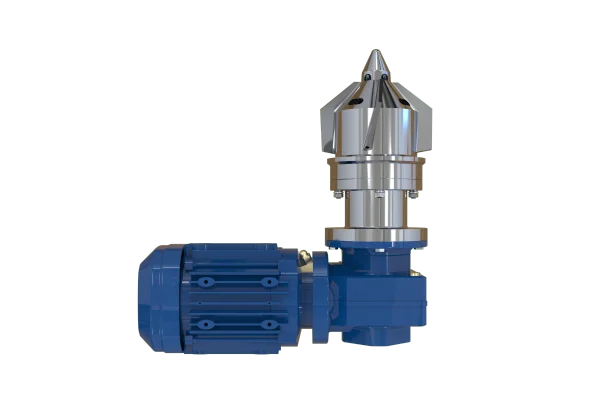
The maglev version incorporates an additional magnetic mechanism to manage the axial position of the internal assembly. During normal operation, the assembly remains suspended so that the axial end faces do not rub against each other.
This reduces friction at that specific interface and can help limit associated component wear. It also changes the forces acting on the assembly during installation and startup, making the levitation design and assembly procedure important considerations.
The maglev mechanism does not mean that every component is contact-free. Radial positioning and other supporting interfaces remain part of the mechanical design. Engineers should therefore evaluate the complete support structure rather than interpreting magnetic levitation as the elimination of all mechanical contact.
Why Axial Positioning Matters for Wear and Maintenance
The practical significance of the maglev structure becomes clearer when examining how contact occurs inside the mixer.
When two surfaces rotate relative to each other while pressed together, friction acts at their interface. Depending on the materials and loading conditions, this can gradually affect surface condition and component service life.
By suspending the internal assembly and preventing axial end-face rubbing during normal operation, the maglev mechanism reduces this particular source of friction. It can help limit wear at relevant surfaces, including the sleeve end face, and reduce the risk of particles associated with deterioration at that interface.
For high-purity processing, this is a useful design consideration because equipment-related particles may be an important contamination-control concern. However, reducing wear at one interface does not guarantee that the complete mixer will generate no particles. Other components, process materials, installation practices, and cleaning procedures must also be considered.
Maintenance planning should reflect the actual design. Rather than assuming that a maglev mixer requires no inspection, operators should follow the manufacturer's instructions for checking relevant components, operating conditions, and signs of abnormal wear.
Installation: Protecting the Sliding Bearing
Another structural difference becomes relevant before the mixer begins operating.
During installation, magnetic attraction can exert a downward force on the internal assembly. If the assembly moves downward and strikes the silicon carbide sliding bearing, the impact may damage the bearing or affect its condition before normal operation starts.
The levitation mechanism in the specified maglev design helps counter this installation-related risk by reducing the likelihood of the internal magnetic assembly being pulled downward with excessive force. This can help protect the sliding bearing during assembly and handling.
Correct installation is still essential. The equipment should be assembled according to the manufacturer's procedure, with the required alignment, clearances, and handling precautions observed. Magnetic levitation is a design aid, not a substitute for proper installation practice.
What About Sealing and Contamination Control?
One common source of confusion is the assumption that magnetic drive and magnetic levitation are the same feature.
They are not.
Magnetic drive allows torque to pass through a stationary isolation barrier without requiring a conventional rotating shaft penetration through the vessel wall. This can eliminate the associated dynamic shaft-seal interface when the mixer and vessel are designed accordingly.
Both conventional magnetic bottom mixers and maglev bottom magnetic mixers may offer this type of sealing arrangement. It is therefore not, by itself, the defining difference between the two.
The additional contribution of the maglev mechanism concerns axial positioning and reduced end-face friction. In applications with stringent cleanliness requirements, this can complement the sealing arrangement by addressing a separate equipment-wear consideration.
Overall contamination control still depends on the isolation sleeve, static seals, product-contact materials, surface finish, vessel connections, cleaning procedures, and operating practices. Neither magnetic drive nor magnetic levitation independently guarantees absolute freedom from leakage or particles.
When Is the Maglev Design Worth Considering?
A conventional magnetic bottom mixer may be sufficient when its support arrangement meets the process requirements and the associated wear characteristics are acceptable.
A maglev bottom magnetic mixer deserves closer evaluation when reducing axial end-face friction, limiting wear at relevant components, or protecting the internal assembly during installation is an important design objective. These considerations may carry additional weight in high-purity pharmaceutical and biopharmaceutical equipment, where equipment condition and contamination control are closely managed.
Before selecting a design, engineers should examine the actual bearing and support structure, the conditions under which levitation is maintained, the permitted operating range, and the manufacturer's maintenance requirements. If dry-running capability is important, the approved conditions and duration should also be confirmed rather than assuming that every maglev mixer can operate without liquid indefinitely.
The decision should ultimately reflect the difference between the two mechanical designs, not simply the product label.
Choosing the Right Magnetic Bottom Mixer Structure
Conventional magnetic bottom mixers and maglev bottom magnetic mixers share the principle of magnetic torque transmission, but their internal support arrangements can differ significantly. The conventional design uses its specified bearing or contact structure to support the rotating assembly, while the maglev design adds a mechanism to control axial positioning and reduce contact between the axial end faces during normal operation.
For applications where axial wear and installation-related bearing protection are important considerations, this additional mechanism may offer a practical advantage. Evaluating the actual construction, process conditions, and maintenance requirements will help engineers determine whether that advantage justifies choosing a maglev version for their mixing system.


