


In industrial fermentation, maintaining batch purity requires more than controlling raw materials and sterilization procedures. The design of the fermentation vessel, mixing equipment, transfer lines, and cleaning system all influence the risk of contamination. Even a small weakness at an equipment interface can create additional challenges for maintaining hygienic operating conditions, particularly in processes involving long cultivation cycles, high-value products, or strict microbial control requirements.
Conventional agitators often use a rotating shaft that passes through the vessel wall or tank head. This arrangement requires a dynamic mechanical seal to contain the process liquid while allowing continuous shaft rotation. Seal performance can be affected by operating speed, temperature, pressure, material compatibility, and wear. If the sealing interface deteriorates, leakage or an increased maintenance burden may compromise equipment availability and hygienic control.
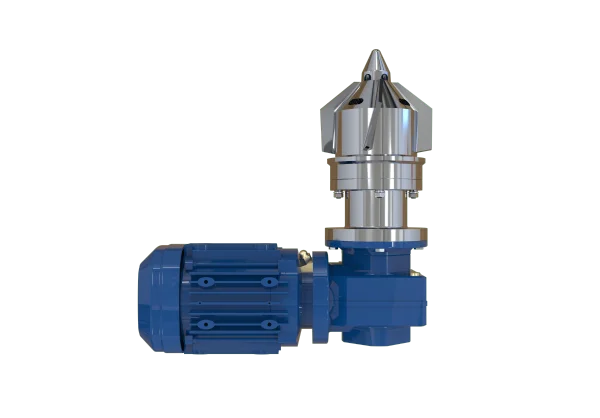
A maglev bottom-entry magnetic mixer offers an alternative approach. By combining magnetic torque transmission with a bottom-mounted mixing configuration and a magnetic levitation mechanism, it can reduce axial end-face friction within the agitator assembly while supporting a vessel design that avoids a conventional rotating shaft penetration.
How Magnetic Drive Supports a Hermetically Sealed Vessel
The key sealing advantage of a magnetic mixer comes from transmitting rotational force through a stationary isolation barrier rather than using a rotating drive shaft that passes directly through the vessel boundary.
In a suitably designed magnetic drive system, an external drive magnet transfers torque to an internal magnet assembly through the isolation sleeve. The sleeve remains stationary and separates the process fluid from the external drive components. Because there is no conventional rotating shaft passing through this barrier, the corresponding dynamic shaft-seal interface can be eliminated.
This arrangement supports a hermetically sealed vessel design and reduces one potential leakage path associated with conventional shaft-driven agitators. It is particularly relevant to fermentation systems in which the vessel must maintain controlled internal conditions throughout sterilization, inoculation, cultivation, and product recovery.
However, hermetic performance depends on the complete assembly, including the isolation sleeve, static seals, welds, connections, and vessel design. The term hermetic should therefore describe a verified sealing configuration rather than an automatic guarantee that contamination is impossible under all operating conditions.
How Magnetic Levitation Reduces Internal Component Wear
In addition to magnetic torque transmission, the maglev design introduces a levitation mechanism into the bottom-entry agitator. During operation, the internal magnet assembly is suspended by the magnetic levitation structure, with no contact at the axial end face and radial positioning maintained by the designed support arrangement.
This reduces axial end-face friction compared with a configuration in which the corresponding surfaces remain in contact during operation. Less friction can help reduce wear at relevant components, including the sleeve end face, and lower the risk of particles generated by component deterioration.
For fermentation applications, this is important because equipment wear and process contamination are different concerns that can interact. A sealed vessel boundary helps limit contamination pathways from the external environment, while reduced internal wear helps address another potential source of unwanted particles. The two design features contribute to different aspects of process integrity.
The levitation mechanism also helps reduce the risk of the internal magnetic assembly pulling downward with excessive force during installation and striking the silicon carbide sliding bearing. This can help protect the bearing during equipment assembly and handling.
Dry-running capability may also be available under manufacturer-approved conditions. Operating limits should be confirmed before use, since permissible dry-running duration and conditions depend on the specific design.
Applications in Fermentation Processes
Maglev bottom-entry magnetic mixers can be considered for fermentation systems where sealing integrity, component wear, and hygienic operation are important equipment-selection factors.
Microbial Fermentation
Microbial fermentation may involve extended cultivation periods and intensive mixing or aeration. Maintaining vessel integrity is important because contamination can affect an entire batch, leading to lost raw materials, extended downtime, and additional cleaning or sterilization work.
A magnetic drive configuration without a conventional dynamic shaft-seal interface can simplify one aspect of sealing design. Reduced axial end-face friction can also help limit wear-related concerns within the agitator assembly. The suitability of the mixer still depends on the organism, broth properties, required mixing intensity, and operating conditions.
Enzyme and Organic Acid Production
Enzyme, amino acid, and organic acid fermentation processes can place substantial demands on equipment availability and batch consistency. Depending on the process, changes in broth viscosity, solids content, aeration, and operating duration can influence mixing performance and equipment wear.
For these applications, the value of a maglev bottom-entry mixer lies in combining a magnetic drive sealing arrangement with reduced axial friction in the internal assembly. When integrated into a suitable fermentation vessel, it can support hygienic equipment design while helping reduce maintenance concerns associated with wear at the relevant contact surfaces.
High-Value Bioprocesses
In high-value fermentation and bioprocessing, a contaminated batch may result in significant product loss and require a full cleaning and sterilization cycle before production resumes. Equipment design should therefore support a controlled process boundary and repeatable cleaning procedures.
A maglev magnetic mixer may be appropriate where the process requires a sealed vessel configuration and the mixer materials are compatible with the product and cleaning agents. The final design should also account for sterilization temperature, pressure conditions, seal materials, and the requirements of the applicable hygienic or bioprocess standards.
Integrating Maglev Mixers into a Complete Fermentation System
The sealing advantage of a maglev bottom-entry magnetic mixer is most useful when it is considered as part of the complete fermentation installation rather than as an isolated component.
During system design, engineers should evaluate the vessel isolation sleeve, static sealing interfaces, bottom mounting structure, and connections to associated piping and instrumentation. These interfaces need to be compatible with the intended cleaning-in-place (CIP) and sterilization-in-place (SIP) procedures where applicable. Drainability, surface finish, and the prevention of product-retaining areas also influence hygienic performance.
Mixing requirements must be assessed alongside sealing considerations. Impeller geometry, rotational speed, vessel dimensions, liquid viscosity, solids concentration, and gas introduction all affect circulation and process performance. A mixer that offers a suitable sealing arrangement must still provide the mixing conditions required by the fermentation process.
For complete fermentation equipment, integration planning should also cover drive control, monitoring, installation access, and maintenance procedures. Confirming these details before commissioning helps ensure that the mixer and vessel operate as a coordinated system.
Evaluating Sealing Performance and Long-Term Reliability
When selecting a maglev bottom-entry magnetic mixer for fermentation, engineers should examine both the design features and the evidence supporting their performance. Relevant checks may include the specified leak-tightness requirements, static seal compatibility, pressure and temperature limits, cleaning and sterilization compatibility, and the manufacturer's instructions for installation and operation.
It is also important to distinguish between eliminating a conventional dynamic shaft-seal interface and guaranteeing that the entire system cannot leak. Welds, static gaskets, piping connections, instrumentation ports, and other vessel interfaces still require appropriate design, inspection, and maintenance.
For batch-sensitive fermentation processes, the objective is to reduce avoidable contamination pathways while maintaining consistent mixing and manageable maintenance requirements. A well-integrated maglev bottom-entry magnetic mixer can contribute to this objective through its magnetic drive arrangement and reduced axial end-face friction, helping support a more controlled and reliable fermentation equipment system.


