


In biopharmaceutical manufacturing, high-purity tanks are used for preparing buffers, holding process liquids, formulating media, and handling intermediates before downstream processing. In these applications, product purity depends not only on raw material quality and cleaning procedures but also on the condition of the equipment in contact with the process.
Particles can enter a tank through incoming materials, transfer lines, seals, installation activities, or deterioration of mechanical components. Even when the vessel is manufactured from stainless steel and designed for hygienic service, wear at a moving interface can introduce an additional contamination risk that needs to be controlled.
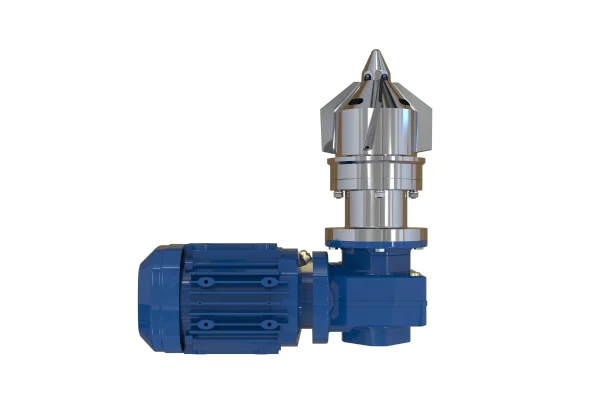
This makes the agitator an important part of the overall tank design. A conventional agitator may rely on contacting components and a rotating shaft seal, creating mechanical interfaces that require inspection and maintenance. A maglev bottom magnetic mixer addresses two specific aspects of this challenge: it uses magnetic drive transmission to support a closed vessel design, and its levitation mechanism reduces axial end-face friction within the agitator assembly.
For high-purity biopharmaceutical systems, these features can help reduce selected sources of equipment-related contamination when combined with appropriate materials, hygienic construction, and validated cleaning procedures.
Where Can Equipment-Related Particles Originate?
Particle control is more effective when the potential sources are identified before the complete tank system is specified. In a high-purity vessel, the investigation should distinguish between particles generated by equipment and those introduced from the process environment.
Wear at moving interfaces: Components that repeatedly contact each other may gradually deteriorate during operation. Depending on the material, contact conditions, and maintenance state, this deterioration can produce wear debris.
Agitator support and sleeve components: In bottom-entry magnetic agitators, the condition of the internal magnetic assembly, sleeve, bearing arrangement, and related support components matters. Axial contact friction can contribute to wear at the corresponding end-face interface in designs where those surfaces contact during operation.
Vessel boundary interfaces: Shaft seals, gaskets, welds, and piping connections must maintain the required integrity. These interfaces are not all sources of particles, but unsuitable materials, deterioration, or poor installation can create contamination or leakage concerns.
Cleaning and maintenance activities: Residues, damaged surfaces, improperly installed components, or incomplete cleaning can also compromise tank cleanliness. These issues cannot be corrected through the agitator design alone.
A complete equipment solution therefore needs to address both particle generation within the machine and the routes through which contamination can enter or remain in the process system.
The Maglev Mechanism: Reducing a Specific Wear Source
The key mechanical distinction of a maglev bottom magnetic mixer is the levitation arrangement inside the agitator. During operation, the internal magnet assembly is suspended by the magnetic levitation mechanism. The axial end face does not contact and rub against the corresponding surface, while radial positioning is maintained by the designed support arrangement.
By reducing axial end-face friction, the design can help limit wear at relevant components, including the sleeve end face. It can also reduce the risk of particles associated with deterioration at that particular interface.
This matters in high-purity tanks because particle control involves more than preventing contaminants from entering through external openings. The condition of components inside the process equipment must also be considered throughout the operating cycle.
The levitation mechanism additionally helps reduce the risk of the internal magnetic assembly being pulled downward with excessive force during installation and striking the silicon carbide sliding bearing. This can help protect the bearing during assembly and handling.
These benefits should be understood within their mechanical scope. Magnetic levitation does not eliminate every possible source of particles, and it does not mean that all internal components operate without contact. Radial positioning, bearing design, material selection, operating conditions, and maintenance remain relevant to long-term reliability.
Rethinking the Vessel Boundary with Magnetic Drive
Particle control and sealing integrity are closely related, but they address different risks. Particles may originate from component wear, while a compromised vessel boundary may allow external contamination or process leakage.
A magnetic drive transmits torque from the external drive assembly to the internal magnetic assembly through a stationary isolation barrier. In a properly engineered configuration, this avoids the conventional rotating shaft passing through the vessel wall and eliminates the associated dynamic shaft-seal interface.
For biopharmaceutical tank systems, this arrangement can simplify one aspect of the vessel boundary by removing a conventional dynamic sealing point. The stationary isolation barrier separates the process side from the external drive components while allowing the agitator to operate.
The result is a design that can support a closed, hygienic tank configuration. However, the isolation sleeve, static seals, welds, nozzles, and piping connections must still be designed and verified for the intended service. A magnetic drive alone does not establish that the complete assembly is particle-free or absolutely leak-proof.
Designing the Complete High-Purity Tank System
A maglev bottom magnetic mixer delivers its intended value only when the surrounding equipment supports the same contamination-control objectives. For system integrators and biopharmaceutical equipment manufacturers, several design decisions deserve attention.
Product-Contact Materials and Surface Condition
Materials exposed to the process must be compatible with the product, cleaning agents, and sterilization conditions. Stainless steel grade, surface finish, component compatibility, and fabrication quality should be specified according to the intended application and applicable requirements.
The design should also consider joints, crevices, and areas where product or cleaning liquid could accumulate. Reducing agitator wear does not compensate for poorly finished surfaces or unsuitable product-contact materials elsewhere in the tank.
Cleanability and Sterilization Compatibility
High-purity vessels may require cleaning-in-place (CIP), sterilization-in-place (SIP), or other established cleaning and sterilization procedures. The tank, agitator, isolation barrier, and associated connections must be compatible with the required temperatures, pressures, chemicals, and operating cycles.
Cleaning effectiveness depends on the complete system, including vessel geometry, liquid circulation, drainage, and access to relevant surfaces. Equipment integration should therefore be reviewed before fabrication rather than addressed only during commissioning.
Installation and Maintenance Planning
The installation procedure should protect the internal magnetic assembly and bearing components from unnecessary impact or loading. The maglev structure can help reduce the risk of downward magnetic attraction damaging the silicon carbide sliding bearing during installation, but correct handling and assembly procedures remain necessary.
Maintenance planning should include inspection of relevant components, monitoring for abnormal operating conditions, and replacement criteria established by the manufacturer. Any claim of reduced particle generation should be supported by the equipment design and appropriate verification rather than assumed from the presence of a levitation mechanism alone.
Where These Systems Fit in Biopharmaceutical Manufacturing
Maglev bottom magnetic mixers may be considered for high-purity tanks used in buffer preparation, media preparation, process-liquid holding, and other biopharmaceutical operations where hygienic design and component wear are important considerations.
In buffer and media preparation, the equipment must provide suitable liquid circulation while maintaining the required cleanliness of the vessel. In process-liquid holding applications, the tank design may place greater emphasis on closed-system integrity, material compatibility, and reliable cleaning between batches.
The mixer must still be matched to the actual process. Tank dimensions, working volume, liquid properties, impeller configuration, operating speed, and required mixing performance all influence suitability. Particle-control features cannot replace the need to verify circulation, avoid unacceptable foaming or air entrainment, and meet the process's product-quality requirements.
For complete equipment projects, these factors should be reviewed together with the tank, drive unit, instrumentation, piping connections, cleaning arrangements, and maintenance access. This allows the equipment supplier to address contamination risks as part of the system architecture rather than relying on a single component to solve every problem.
Verifying Particle-Control Performance
The objective of using a maglev bottom magnetic mixer is not simply to claim that contamination has been eliminated. It is to identify avoidable sources of equipment-related particles and reduce the relevant risks through a suitable mechanical and hygienic design.
For a high-purity tank project, verification may include reviewing material specifications, surface-finish requirements, isolation-barrier and static-seal integrity, cleaning and sterilization compatibility, and the manufacturer's maintenance instructions. Where the application requires specific particulate limits, the acceptance criteria and test methods should be defined for the actual process.
Particle testing, equipment inspection, and process qualification may be needed to demonstrate that the complete system meets its requirements. The applicable approach depends on the product, process, and quality system; reduced axial friction alone is not proof that a tank meets a particular particulate specification.
By combining a magnetic drive arrangement with reduced axial end-face friction and carefully engineered tank integration, a maglev bottom magnetic mixer can help address selected equipment-related contamination risks in high-purity biopharmaceutical systems. Its contribution is most meaningful when the agitator, vessel, materials, interfaces, cleaning strategy, and verification plan are designed as one coordinated solution.


