


Bottom-mounted Magnetic Dispersing Mixer




What Is a Bottom-Mounted Magnetic Dispersing Mixer?
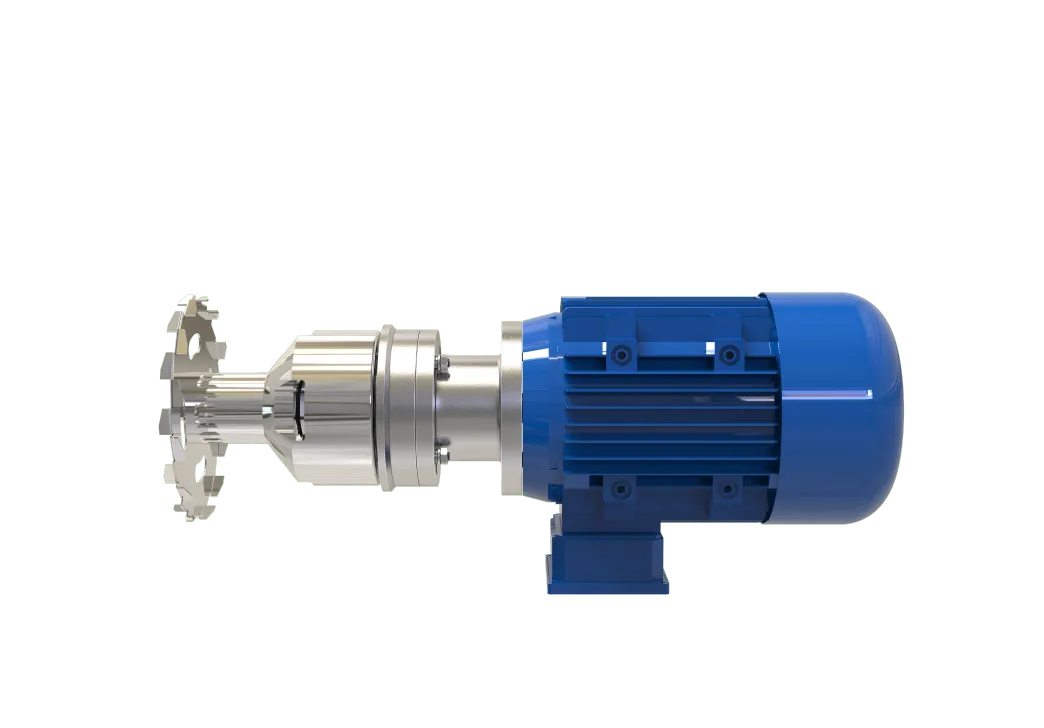
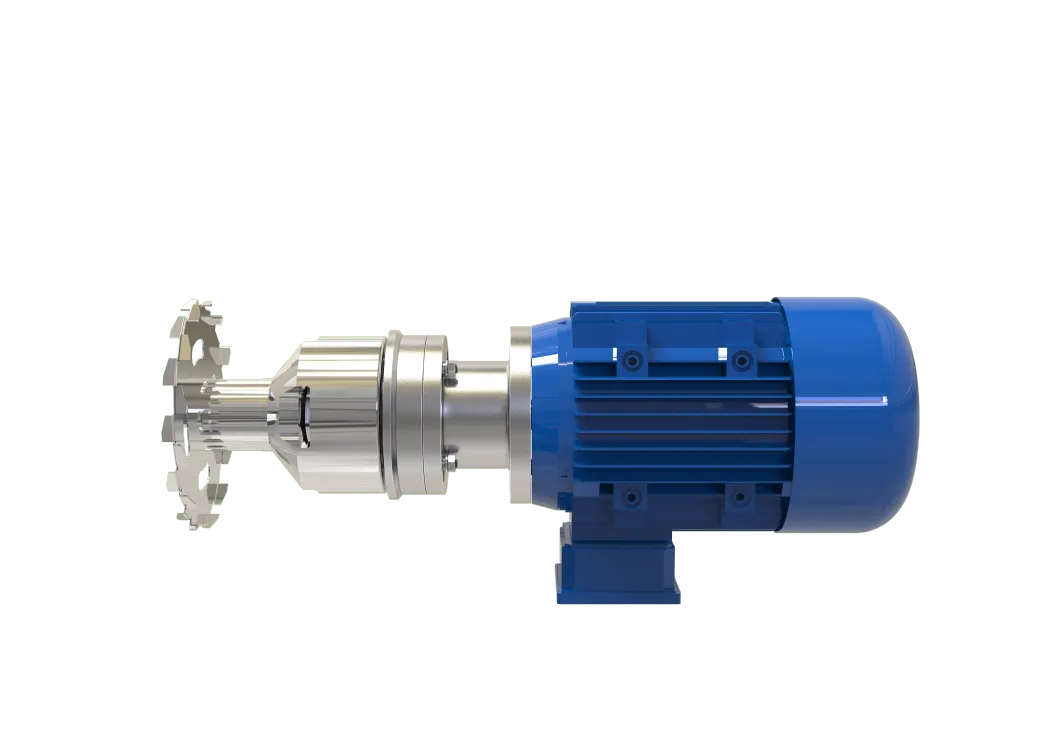
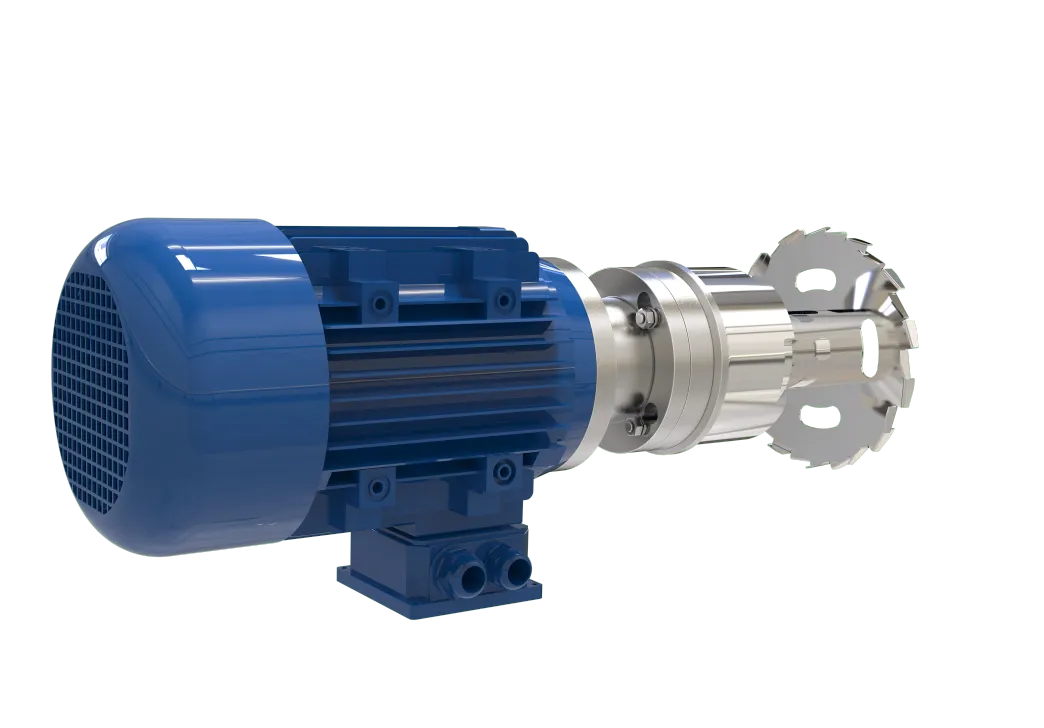
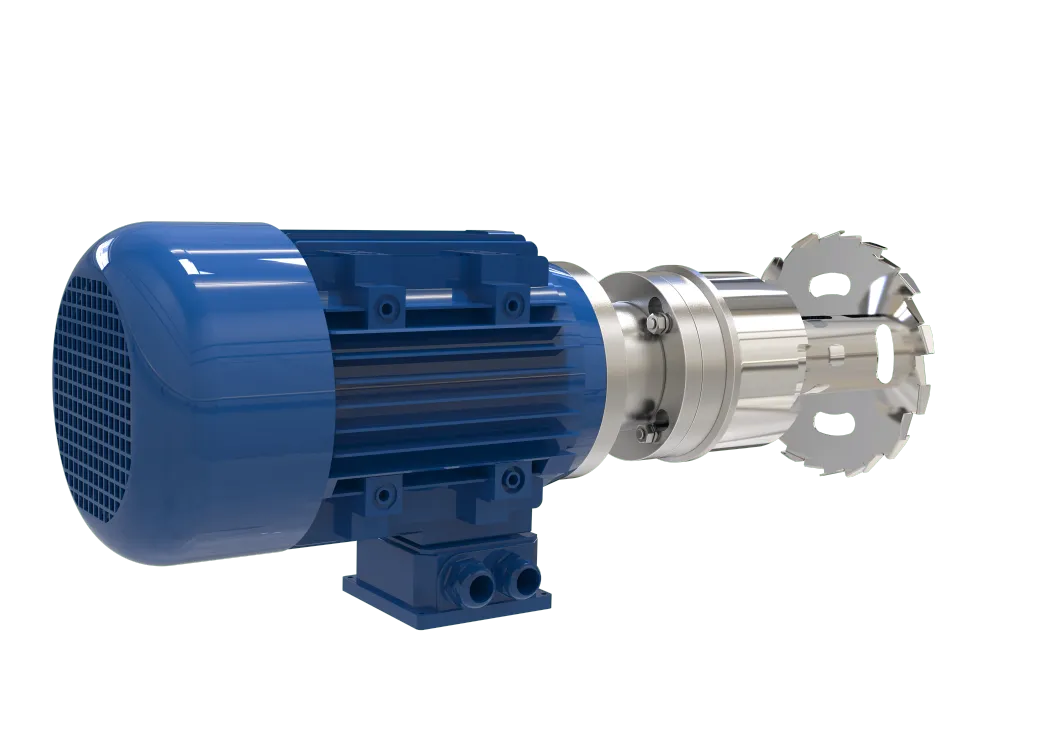
A Bottom-Mounted Magnetic Dispersing Mixer is a vessel-bottom mixing device designed to disperse ingredients, promote solid-liquid mixing, and improve the distribution of different components in a process batch. It combines a magnetic drive system with a dispersing impeller, making it suitable for production processes where mixing performance and product containment are both important.
Unlike a conventional shaft-driven agitator, the mixer transfers torque through magnetic coupling. An isolation sleeve separates the internal magnetic assembly from the external drive, allowing the impeller to rotate inside the vessel without a rotating drive shaft passing through the tank wall. This arrangement replaces the conventional dynamic shaft-sealing point with a static sealing structure, helping reduce the risk of leakage and external contamination.
The defining feature of this model is its dispersing impeller. Its rotating blades generate strong local flow and radial material movement, helping draw ingredients into the active mixing zone and distribute them throughout the vessel. The result is a practical mixing solution for formulations that require more than simple bulk circulation.
How Does the Magnetic Dispersing Mixer Work?
The mixer consists of an internal magnetic assembly connected to the impeller, an isolation sleeve, a sliding bearing, an external magnetic assembly, and a drive unit.
When the motor drives the external magnetic assembly, magnetic torque passes through the isolation sleeve and rotates the internal assembly. The impeller then draws nearby liquid and ingredients toward its working area before accelerating the material outward.
As the dispersed material moves toward the vessel wall, the resulting flow contributes to circulation within the tank. Repeated movement through the impeller's active zone helps distribute ingredients and supports the wetting and dispersion of compatible powders and liquid components.
The dispersing effect depends on the relationship between impeller geometry, rotational speed, material viscosity, and the physical properties of the ingredients. A suitable operating speed helps establish the local flow needed for the intended process without relying on motor power alone to determine mixing quality.
For applications involving agglomerated powders or ingredients that are difficult to wet, the way materials are introduced into the vessel also matters. Feeding powders gradually into the active mixing zone can help improve wetting and reduce the formation of persistent lumps.
Key Features of the Bottom-Mounted Magnetic Dispersing Mixer
A Dispersing Impeller Designed for Local Mixing Intensity
The dispersing impeller is the central working component of this mixer. Its rotating blades generate localized flow and drive material away from the impeller, supporting the breakdown of loose agglomerates, ingredient distribution, and solid-liquid dispersion.
This makes the equipment suitable for processes in which ingredients must be incorporated into a liquid phase rather than simply circulated around the vessel.
However, dispersion and emulsification are not identical. The mixer can support solid-liquid dispersion and liquid blending, while applications requiring a specific emulsion droplet size or a narrowly controlled particle-size distribution need to be evaluated against the actual impeller design and process conditions.
Magnetic Drive with Static Sealing
The magnetic drive transfers torque without a conventional rotating shaft penetrating the vessel wall. The isolation sleeve provides the physical separation between the internal and external magnetic assemblies.
By removing the traditional dynamic shaft-sealing point, this arrangement helps address a common source of leakage in mixing equipment. It is particularly useful when processing valuable ingredients or products for which external contamination and product loss must be minimized.
The isolation sleeve, its joints, and the complete vessel assembly must still be designed for the specified operating pressure, temperature, and process medium.
Bottom-Mounted Installation for Direct Material Engagement
Installing the dispersing unit at the bottom of the vessel places the impeller near the lower region of the batch. This arrangement can help engage material that settles or accumulates near the vessel bottom, depending on the tank geometry and impeller flow pattern.
It can also be useful for compact process layouts where a top-mounted drive is inconvenient.
For batches with changing liquid levels, the minimum working volume should be considered carefully. The impeller must remain suitably immersed to avoid excessive air entrainment, unstable flow, or reduced dispersion performance.
Multiple Models for Different Batch Volumes
The CJF series covers a range of vessel capacities, with model options suited to working volumes from approximately 50 L to 5,000 L. Impeller diameters range from 80 mm to 200 mm across the listed models.
This range allows the mixer to be matched to different batch sizes and process requirements. The appropriate model depends not only on vessel volume but also on the viscosity of the medium, the quantity of material to be dispersed, and the intensity of mixing required.
The series offers different motor power options for rotational-speed ranges up to 960 rpm, 1,450 rpm, and 2,800 rpm. Higher rotational speed is not automatically better: the selected combination should provide the required dispersing action while remaining suitable for the formulation and mechanical operating conditions.
Important Operating Conditions and Material Compatibility
The mixer is intended primarily for medium-viscosity materials and general dispersion and mixing applications. For media with viscosity exceeding 100 cP, the operating requirements should be reviewed with the technical team before confirming a model.
The listed standard operating temperature is up to 130°C, with a working pressure range of approximately -0.09 to 0.6 MPa. Applications outside these conditions require technical review and may need a customized design.
Product-contact components can be selected in stainless steel 304 or 316L. The sliding bearing is available in silicon carbide or hard alloy, depending on the application. Material selection should account for the chemical composition of the product, abrasive ingredients, cleaning agents, and expected operating conditions.
These considerations are particularly important when the mixer handles powders containing abrasive particles or formulations that require frequent cleaning.
Typical Applications
The Bottom-Mounted Magnetic Dispersing Mixer can be integrated into preparation tanks and process vessels in pharmaceutical, food, and related manufacturing industries.
Typical applications include:
- Pharmaceutical preparation: Mixing compatible ingredients in formulation, buffer preparation, and liquid preparation vessels.
- Food and beverage processing: Dispersing soluble or suspendable ingredients and blending liquid formulations.
- Powder incorporation: Supporting powder wetting and solid-liquid mixing when ingredients are introduced under suitable operating conditions.
- General batch processing: Distributing components throughout a vessel where controlled dispersion is required.
For sterile or high-purity applications, the mixer should be assessed as part of the complete process system, including vessel design, cleaning procedures, and any required sterilization cycle.
How to Select the Right Model
Model selection should begin with the working batch volume and the properties of the material. The next step is to establish whether the process requires general blending, powder dissolution, or more intensive solid-liquid dispersion.
The impeller diameter, motor power, and operating speed should then be considered together. A formulation containing a high proportion of solids may behave differently from a low-viscosity liquid, even when both are processed in vessels of the same volume.
Before finalizing the selection, confirm the medium's viscosity, operating temperature and pressure, material compatibility, and cleaning requirements. If the process requires particularly fine dispersion or involves viscosity above the stated range, a technical review is advisable.
A Practical Solution for Controlled Dispersion
The Bottom-Mounted Magnetic Dispersing Mixer combines a dispersing impeller with magnetic torque transmission and a static isolation sleeve. Its main value lies in bringing localized dispersing action and reduced dynamic sealing risk into a compact, bottom-mounted arrangement.
With multiple CJF models covering different vessel capacities and rotational-speed options, the series can serve a range of batch preparation and solid-liquid mixing duties. Matching the impeller, motor power, and operating conditions to the formulation is essential to achieving consistent dispersion and reliable operation.

Description
What Is a Bottom-Mounted Magnetic Dispersing Mixer?
A Bottom-Mounted Magnetic Dispersing Mixer is a vessel-bottom mixing device designed to disperse ingredients, promote solid-liquid mixing, and improve the distribution of different components in a process batch. It combines a magnetic drive system with a dispersing impeller, making it suitable for production processes where mixing performance and product containment are both important.
Unlike a conventional shaft-driven agitator, the mixer transfers torque through magnetic coupling. An isolation sleeve separates the internal magnetic assembly from the external drive, allowing the impeller to rotate inside the vessel without a rotating drive shaft passing through the tank wall. This arrangement replaces the conventional dynamic shaft-sealing point with a static sealing structure, helping reduce the risk of leakage and external contamination.
The defining feature of this model is its dispersing impeller. Its rotating blades generate strong local flow and radial material movement, helping draw ingredients into the active mixing zone and distribute them throughout the vessel. The result is a practical mixing solution for formulations that require more than simple bulk circulation.
How Does the Magnetic Dispersing Mixer Work?
The mixer consists of an internal magnetic assembly connected to the impeller, an isolation sleeve, a sliding bearing, an external magnetic assembly, and a drive unit.
When the motor drives the external magnetic assembly, magnetic torque passes through the isolation sleeve and rotates the internal assembly. The impeller then draws nearby liquid and ingredients toward its working area before accelerating the material outward.
As the dispersed material moves toward the vessel wall, the resulting flow contributes to circulation within the tank. Repeated movement through the impeller's active zone helps distribute ingredients and supports the wetting and dispersion of compatible powders and liquid components.
The dispersing effect depends on the relationship between impeller geometry, rotational speed, material viscosity, and the physical properties of the ingredients. A suitable operating speed helps establish the local flow needed for the intended process without relying on motor power alone to determine mixing quality.
For applications involving agglomerated powders or ingredients that are difficult to wet, the way materials are introduced into the vessel also matters. Feeding powders gradually into the active mixing zone can help improve wetting and reduce the formation of persistent lumps.
Key Features of the Bottom-Mounted Magnetic Dispersing Mixer
A Dispersing Impeller Designed for Local Mixing Intensity
The dispersing impeller is the central working component of this mixer. Its rotating blades generate localized flow and drive material away from the impeller, supporting the breakdown of loose agglomerates, ingredient distribution, and solid-liquid dispersion.
This makes the equipment suitable for processes in which ingredients must be incorporated into a liquid phase rather than simply circulated around the vessel.
However, dispersion and emulsification are not identical. The mixer can support solid-liquid dispersion and liquid blending, while applications requiring a specific emulsion droplet size or a narrowly controlled particle-size distribution need to be evaluated against the actual impeller design and process conditions.
Magnetic Drive with Static Sealing
The magnetic drive transfers torque without a conventional rotating shaft penetrating the vessel wall. The isolation sleeve provides the physical separation between the internal and external magnetic assemblies.
By removing the traditional dynamic shaft-sealing point, this arrangement helps address a common source of leakage in mixing equipment. It is particularly useful when processing valuable ingredients or products for which external contamination and product loss must be minimized.
The isolation sleeve, its joints, and the complete vessel assembly must still be designed for the specified operating pressure, temperature, and process medium.
Bottom-Mounted Installation for Direct Material Engagement
Installing the dispersing unit at the bottom of the vessel places the impeller near the lower region of the batch. This arrangement can help engage material that settles or accumulates near the vessel bottom, depending on the tank geometry and impeller flow pattern.
It can also be useful for compact process layouts where a top-mounted drive is inconvenient.
For batches with changing liquid levels, the minimum working volume should be considered carefully. The impeller must remain suitably immersed to avoid excessive air entrainment, unstable flow, or reduced dispersion performance.
Multiple Models for Different Batch Volumes
The CJF series covers a range of vessel capacities, with model options suited to working volumes from approximately 50 L to 5,000 L. Impeller diameters range from 80 mm to 200 mm across the listed models.
This range allows the mixer to be matched to different batch sizes and process requirements. The appropriate model depends not only on vessel volume but also on the viscosity of the medium, the quantity of material to be dispersed, and the intensity of mixing required.
The series offers different motor power options for rotational-speed ranges up to 960 rpm, 1,450 rpm, and 2,800 rpm. Higher rotational speed is not automatically better: the selected combination should provide the required dispersing action while remaining suitable for the formulation and mechanical operating conditions.
Important Operating Conditions and Material Compatibility
The mixer is intended primarily for medium-viscosity materials and general dispersion and mixing applications. For media with viscosity exceeding 100 cP, the operating requirements should be reviewed with the technical team before confirming a model.
The listed standard operating temperature is up to 130°C, with a working pressure range of approximately -0.09 to 0.6 MPa. Applications outside these conditions require technical review and may need a customized design.
Product-contact components can be selected in stainless steel 304 or 316L. The sliding bearing is available in silicon carbide or hard alloy, depending on the application. Material selection should account for the chemical composition of the product, abrasive ingredients, cleaning agents, and expected operating conditions.
These considerations are particularly important when the mixer handles powders containing abrasive particles or formulations that require frequent cleaning.
Typical Applications
The Bottom-Mounted Magnetic Dispersing Mixer can be integrated into preparation tanks and process vessels in pharmaceutical, food, and related manufacturing industries.
Typical applications include:
- Pharmaceutical preparation: Mixing compatible ingredients in formulation, buffer preparation, and liquid preparation vessels.
- Food and beverage processing: Dispersing soluble or suspendable ingredients and blending liquid formulations.
- Powder incorporation: Supporting powder wetting and solid-liquid mixing when ingredients are introduced under suitable operating conditions.
- General batch processing: Distributing components throughout a vessel where controlled dispersion is required.
For sterile or high-purity applications, the mixer should be assessed as part of the complete process system, including vessel design, cleaning procedures, and any required sterilization cycle.
How to Select the Right Model
Model selection should begin with the working batch volume and the properties of the material. The next step is to establish whether the process requires general blending, powder dissolution, or more intensive solid-liquid dispersion.
The impeller diameter, motor power, and operating speed should then be considered together. A formulation containing a high proportion of solids may behave differently from a low-viscosity liquid, even when both are processed in vessels of the same volume.
Before finalizing the selection, confirm the medium's viscosity, operating temperature and pressure, material compatibility, and cleaning requirements. If the process requires particularly fine dispersion or involves viscosity above the stated range, a technical review is advisable.
A Practical Solution for Controlled Dispersion
The Bottom-Mounted Magnetic Dispersing Mixer combines a dispersing impeller with magnetic torque transmission and a static isolation sleeve. Its main value lies in bringing localized dispersing action and reduced dynamic sealing risk into a compact, bottom-mounted arrangement.
With multiple CJF models covering different vessel capacities and rotational-speed options, the series can serve a range of batch preparation and solid-liquid mixing duties. Matching the impeller, motor power, and operating conditions to the formulation is essential to achieving consistent dispersion and reliable operation.
Application


Specifications
Advantage Comparison


GET IN TOUCH NOW


