


Why High-Concentration Sugar Syrup Requires Careful Mixing
High-concentration sugar syrup is widely used in beverage manufacturing, confectionery production, bakery formulations, and other food processing applications. Although its ingredients may be relatively simple, preparing a consistent syrup becomes more challenging as the sugar concentration increases.
As more sugar dissolves in water, the liquid generally becomes more viscous, particularly at lower temperatures. Sugar crystals may take longer to dissolve, while differences in temperature and local concentration can create uneven mixing conditions. If the mixing system cannot circulate the liquid effectively, concentrated regions may persist around the vessel bottom or near the ingredient addition point.
These issues can affect batch consistency and complicate downstream operations such as flavor blending, beverage preparation, and transfer through process pipelines. For manufacturers handling concentrated syrup, the objective is not simply to rotate an impeller. It is to establish sufficient liquid circulation to support dissolution and achieve a uniform formulation without introducing unnecessary mechanical wear.
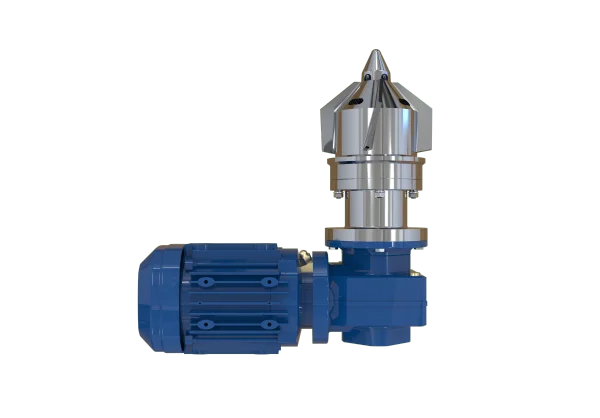
A maglev bottom mixer, or magnetic levitation bottom-entry agitator, offers a practical configuration for suitable syrup preparation tanks. Its bottom-mounted impeller supports mixing near the vessel floor, while the magnetic levitation structure reduces axial end-face friction within the agitator assembly.
How Maglev Bottom Mixers Support Syrup Preparation
Bottom-Mounted Mixing for Liquid Circulation
The location of the impeller influences how liquid moves through a mixing vessel. With a bottom-entry magnetic agitator, the impeller is installed at the lower part of the tank rather than suspended from an overhead shaft.
This arrangement can help generate circulation from the bottom region, where undissolved sugar may accumulate during ingredient addition. When the impeller, vessel geometry, and operating speed are properly matched, the resulting flow helps move liquid between different regions of the tank and distribute dissolved sugar throughout the batch.
For high-concentration syrup, circulation is particularly important because the increasing viscosity can make it harder for the mixing system to distribute momentum throughout the vessel. An appropriate impeller configuration helps limit poorly mixed areas and supports more consistent dissolution.
However, bottom placement alone does not guarantee complete mixing. Tank dimensions, bottom geometry, liquid viscosity, impeller immersion, and the rate at which sugar is added must all be considered when designing the mixing system.
Supporting Uniform Dissolution at High Sugar Concentrations
When crystalline sugar is introduced into water, dissolution depends on several interacting factors, including temperature, liquid circulation, crystal size, and the concentration already reached in the surrounding liquid.
If sugar is added faster than the liquid can disperse it, crystals may accumulate near the bottom or form concentrated masses that dissolve slowly. Localized accumulation can extend preparation time and make the final concentration less consistent.
A suitably selected bottom mixer helps move the liquid around the ingredient addition zone, bringing fresh solvent into contact with sugar crystals and carrying dissolved sugar away from the immediate contact area. This supports the dissolution process and helps reduce concentration differences within the vessel.
The mixer should be selected according to the target sugar concentration and the syrup's viscosity at the actual processing temperature. For particularly concentrated formulations, the process may also require controlled heating, a defined sugar-feeding rate, and sufficient mixing time. Agitation cannot compensate for inadequate temperature control or an unsuitable formulation procedure.
Why Magnetic Levitation Matters in Continuous Batch Preparation
The mixing result depends on the impeller and process conditions, but the agitator's internal mechanical design also affects operating reliability. This is where the magnetic levitation structure provides a distinct benefit.
Reduced Axial Friction During Operation
A conventional bottom-entry magnetic agitator may experience friction where internal components make axial end-face contact. The maglev design incorporates a magnetic levitation device to support the inner magnetic assembly in a suspended state during operation.
By reducing this axial contact, the structure limits friction at the relevant end faces. This helps reduce mechanical energy losses associated with those contact points and supports more efficient operation of the agitator assembly.
For syrup preparation lines producing multiple batches each day, reducing unnecessary mechanical friction can be a useful equipment consideration. Actual mixing efficiency still depends on the impeller design, rotational speed, vessel configuration, and the rheological properties of the syrup.
Lower Wear and Reduced Particle-Generation Risk
Sugar syrup is a food product, so controlling potential contamination from equipment wear is important. Internal components that experience repeated contact may gradually wear, potentially generating fine particles.
The magnetic levitation structure reduces axial end-face friction, helping limit wear associated with those surfaces and lowering the risk of particle generation from the relevant components.
This is particularly relevant when manufacturers want to maintain product cleanliness and reduce avoidable maintenance issues. Nevertheless, the agitator should not be described as completely particle-free. Bearing condition, material selection, installation quality, and routine inspection remain important to managing contamination risks.
Static Sealing for Better Process Containment
The magnetic drive transfers rotation to the internal impeller without requiring a conventional rotating drive shaft to penetrate the vessel wall at the drive connection. A stationary isolation sleeve separates the internal magnetic assembly from the external drive components.
Where a properly designed welded isolation sleeve is used, the arrangement eliminates the dynamic shaft-seal interface associated with a conventional shaft penetration. This helps reduce leakage risks and can simplify the sealing arrangement in food processing equipment.
For syrup applications, the complete tank and agitator assembly should still be evaluated for product-contact material compatibility, weld quality, cleanability, and the selected cleaning procedure. The suitability of the system depends on the hygiene requirements of the actual production line.
Practical Considerations for High-Concentration Syrup Mixing
Choosing a maglev bottom mixer requires an understanding of the formulation and the conditions under which the syrup is prepared.
Sugar concentration and viscosity: Define the target concentration and evaluate viscosity at the actual operating temperature. A mixer selected for a dilute sugar solution may not provide adequate circulation for a much more concentrated syrup.
Ingredient feeding: Add sugar at a rate that allows the liquid to wet and disperse the crystals. Rapid addition can create local accumulations that take longer to dissolve, even when the agitator is operating.
Temperature management: Heating can reduce syrup viscosity and accelerate dissolution in suitable formulations. The mixing system must be compatible with the process temperature, and heating should be controlled to avoid unwanted changes in product quality.
Tank geometry and working volume: Consider the vessel diameter, bottom shape, batch volume, and minimum operating level. These factors influence circulation patterns and whether the impeller can operate effectively throughout the intended batch range.
Cleaning and product changeover: Sugar residues can become difficult to remove if they dry on internal surfaces. Evaluate the tank, impeller, isolation sleeve, and associated connections as a complete system when defining cleaning procedures and changeover requirements.
Addressing these factors together helps ensure that the agitator is selected for the actual syrup formulation rather than on tank volume alone.
Applications in Beverage and Confectionery Production
High-concentration sugar syrup is often prepared as an intermediate ingredient before being diluted or combined with other components. A maglev bottom mixer can be considered for syrup preparation tanks serving several food manufacturing applications.
In beverage production, prepared syrup may be blended with water, flavorings, acids, or other ingredients before further processing. Consistent syrup concentration helps support repeatable formulation and downstream blending.
In confectionery manufacturing, syrup preparation may involve higher sugar concentrations and more demanding control over dissolution. The required mixing arrangement depends on the formulation, temperature profile, batch size, and the condition of the syrup before subsequent processing.
In bakery ingredient preparation, sugar syrup can be used in sweetening systems and other liquid formulations. Reliable mixing helps maintain batch consistency and supports predictable transfer to the next production stage.
For each application, the maglev bottom mixer should be evaluated as part of the complete process system. The appropriate configuration depends on the product's viscosity, required mixing intensity, operating temperature, vessel design, and hygiene requirements.
A More Reliable Approach to Sugar Syrup Preparation
Uniform high-concentration sugar syrup depends on effective liquid circulation, controlled ingredient addition, appropriate temperature management, and a mixing system suited to the formulation. A magnetic levitation bottom-entry agitator combines bottom-mounted mixing with a structure designed to reduce axial friction and related component wear.
Its magnetic drive arrangement also avoids the conventional dynamic shaft-sealing interface at the vessel drive penetration when used with a suitable stationary isolation sleeve. These features make the maglev bottom mixer worth considering for food processing tanks where mixing consistency, equipment reliability, and hygienic design are important.
For manufacturers preparing concentrated sugar syrup in repeated batches, the most effective solution is to match the mixer to the actual viscosity, working volume, tank geometry, and dissolution procedure. This process-focused approach helps improve mixing reliability while keeping equipment selection aligned with production requirements.


