


Fermentation technology is widely used to produce valuable biological products, including enzymes, probiotics, hyaluronic acid, and other bio-based ingredients. However, the challenges of fermentation processing do not end when the biological reaction is complete. The transfer of fermentation-derived materials through downstream processing stages can significantly influence production consistency and final product quality.
Unlike simple industrial liquids, fermentation products often contain complex compositions, including microbial cells, proteins, polysaccharides, suspended components, or high-molecular-weight substances. Their viscosity, sensitivity to mechanical stress, and flow behavior may change throughout processing.
For this reason, pumping equipment must do more than provide sufficient flow. It needs to handle changing fluid characteristics while maintaining gentle transfer conditions, hygienic performance, and reliable operation.
A hygienic twin-screw pump provides a suitable solution for these demanding applications through continuous axial conveying, low-pulse operation, and flexible handling of different viscosities. Its design helps manufacturers maintain stable fluid movement from fermentation processes to downstream product preparation.
Managing Complex Fermentation Fluids After Bioreactor Processing
After fermentation, materials typically enter various downstream stages such as separation, concentration, purification, or formulation. At this stage, the physical properties of the product can vary considerably.
For example, fermentation broth may contain suspended biological components with relatively low viscosity, while concentrated fermentation products may become significantly thicker and more difficult to transfer.
Common pumping challenges include:
- Increased flow resistance caused by higher viscosity
- Unstable transfer conditions during concentration processes
- Product damage caused by excessive mechanical stress
- Difficult cleaning requirements for biological materials
The hygienic twin-screw pump addresses these challenges through a positive displacement operating principle. Two screws rotate inside the pump chamber and create continuous sealed cavities that move the product smoothly from the inlet to the outlet.
This continuous conveying method provides stable transfer performance while reducing pressure fluctuations commonly associated with intermittent pumping mechanisms.
For fermentation-derived products, maintaining a predictable flow environment helps support consistent downstream processing conditions.
Gentle Handling of Enzymes and Probiotic Products During Transfer
Enzymes and probiotics are important fermentation-derived products used across food, nutrition, biotechnology, and other industries. During processing, these products may require careful handling to preserve their intended characteristics.
Mechanical stress during transfer is an important consideration, especially when products contain sensitive biological components. Strong compression, unstable flow, or excessive turbulence may create difficulties in maintaining consistent processing conditions.
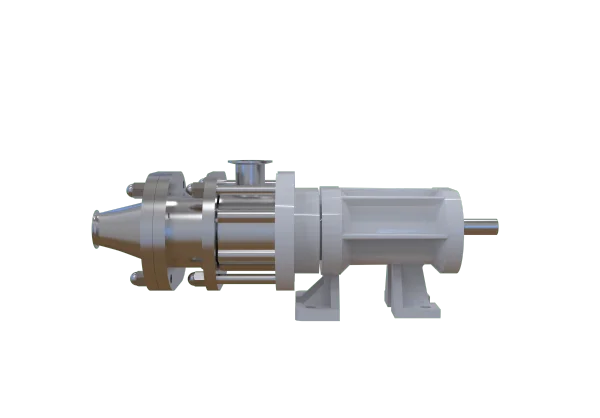
The SLGP hygienic twin-screw pump uses a non-contact screw structure, where the rotating screws operate without direct contact with each other or the pump chamber. This design helps reduce mechanical wear and supports stable operation during continuous production.
The pump also provides low-pulse transfer through smooth axial movement rather than repeated impact-based conveying. This characteristic makes it suitable for applications where controlled handling is required, including:
- Enzyme fermentation product transfer
- Probiotic culture processing
- Biological ingredient preparation
- High-purity fermentation liquid movement
By providing a more stable transfer environment, twin-screw pump technology helps manufacturers maintain better control over fermentation-derived product processing.
High-Viscosity Challenges in Hyaluronic Acid Fermentation Processing
Hyaluronic acid produced through fermentation presents different pumping challenges compared with lower-viscosity fermentation liquids.
As concentration increases during processing, hyaluronic acid solutions may become highly viscous and require greater pumping capability. The equipment must maintain stable suction performance while overcoming increased resistance in pipelines and processing equipment.
A hygienic twin-screw pump is designed to handle a wide range of fluid characteristics, including high-viscosity materials. The SLGP series supports media with viscosity up to 500,000 cSt, allowing it to adapt to demanding transfer conditions.
Additional advantages for high-viscosity fermentation products include:
- Strong self-priming capability
- Stable volumetric transfer
- Adjustable operating speed
- Flexible flow matching through different screw configurations
With a self-priming capability that can achieve vacuum levels up to 0.8 bar when the pump chamber contains product, the pump can support challenging suction conditions often encountered in viscous material handling.
For hyaluronic acid and similar fermentation-derived products, maintaining stable movement during transfer is important for achieving consistent downstream processing performance.
Supporting Consistent Quality Through Stable Pumping Conditions
The quality of fermentation-derived products depends not only on biological production conditions but also on how materials are handled after fermentation.
Unstable pumping conditions can introduce unnecessary variation into downstream processes. Flow fluctuations, pressure changes, or unsuitable operating speeds may affect the consistency of subsequent processing steps.
A hygienic twin-screw pump supports controlled transfer through:
- Wide speed adjustment from 100 to 3600 rpm
- Low-pulse continuous conveying
- Reversible operation
- Adaptability to different viscosity and pressure conditions
Different screw sizes can be selected according to application requirements, allowing manufacturers to match pump performance with specific product characteristics.
This flexibility is especially valuable in fermentation processing, where one production line may handle different products or where material properties change during different processing stages.
Hygienic Requirements for Fermentation-Derived Product Manufacturing
Fermentation products often require strict hygiene control, particularly when they are used in food, biotechnology, pharmaceutical, or high-value ingredient applications.
Pump design plays an important role in maintaining clean processing conditions. Internal flow paths should minimize product retention areas and support efficient cleaning procedures.
The SLGP hygienic twin-screw pump features:
- Smooth product-contact flow channels
- Reduced dead-leg areas
- Easy cleaning structure
- Support for CIP and SIP processes
- Design considerations aligned with GMP, 3-A, and FDA requirements
The pump can also be configured with different sealing options, including single mechanical seals, double mechanical seals, rubber seals, and packing seals, allowing engineers to select suitable solutions according to process requirements.
These hygienic features help integrate the pump into fermentation-derived product manufacturing environments where cleanliness and process reliability are critical.
Supporting Downstream Processing of Fermentation-Derived Products
After fermentation, products often pass through multiple processing steps before becoming final commercial materials. These stages may involve concentration, purification, formulation, or transfer between processing vessels.
During these operations, the pump must handle changing conditions while maintaining reliable performance.
A hygienic twin-screw pump supports downstream processing by providing:
- Stable transfer of viscous biological materials
- Controlled flow during continuous processing
- Flexible operation under different pressure requirements
- Compatibility with hygienic production environments
With a maximum differential pressure of up to 16 bar and the ability to handle product temperatures up to 130°C and cleaning temperatures up to 140°C, the pump can be configured for a variety of demanding fermentation applications.
Rather than focusing only on maximum flow capacity, selecting the right pump requires consideration of the complete product journey—from fermentation characteristics to final processing requirements.
Selecting a Hygienic Twin-Screw Pump for Fermentation Applications
Fermentation-derived products vary widely in composition and processing requirements. Enzymes, probiotics, hyaluronic acid, and other biological products each present different challenges in terms of viscosity, sensitivity, and transfer conditions.
When selecting a hygienic twin-screw pump, manufacturers should evaluate:
- Product viscosity changes during processing
- Required flow stability
- Pressure requirements
- Cleaning and sterilization conditions
- Seal configuration
- Integration with existing process equipment
With its non-contact screw design, low-pulse conveying performance, wide operating range, and hygienic construction, a sanitary twin-screw pump provides a flexible solution for fermentation product processing.
For manufacturers producing high-value fermentation-derived products, reliable fluid handling is an important factor in maintaining consistent production performance from fermentation through downstream processing.


