


Axial-Radial Flow Jet Mixer
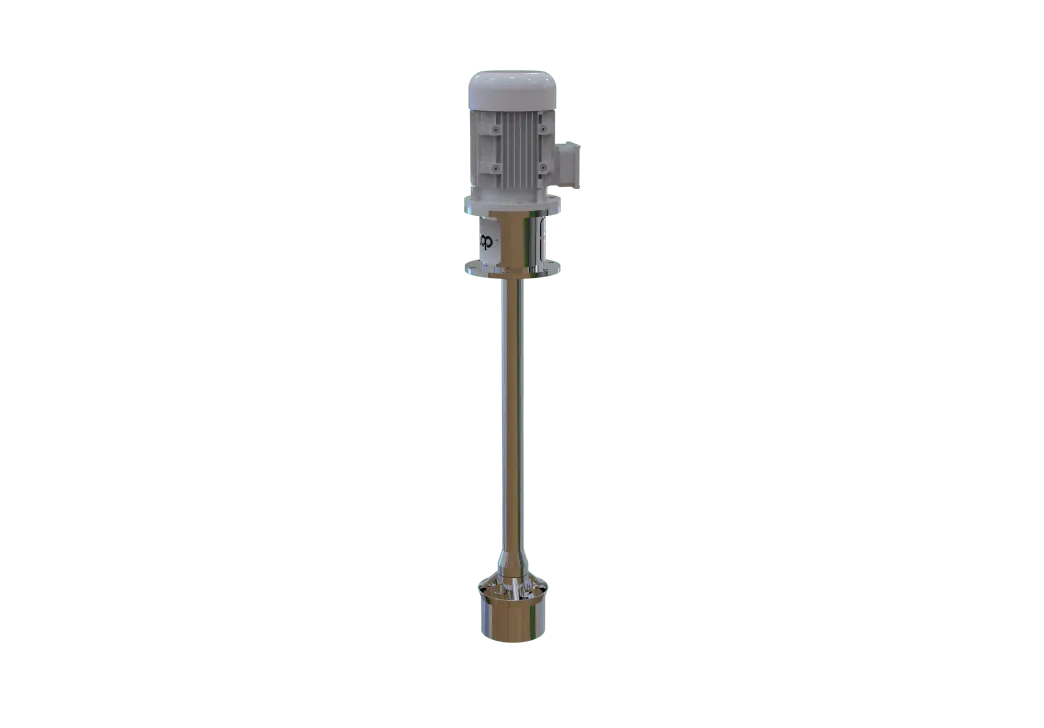
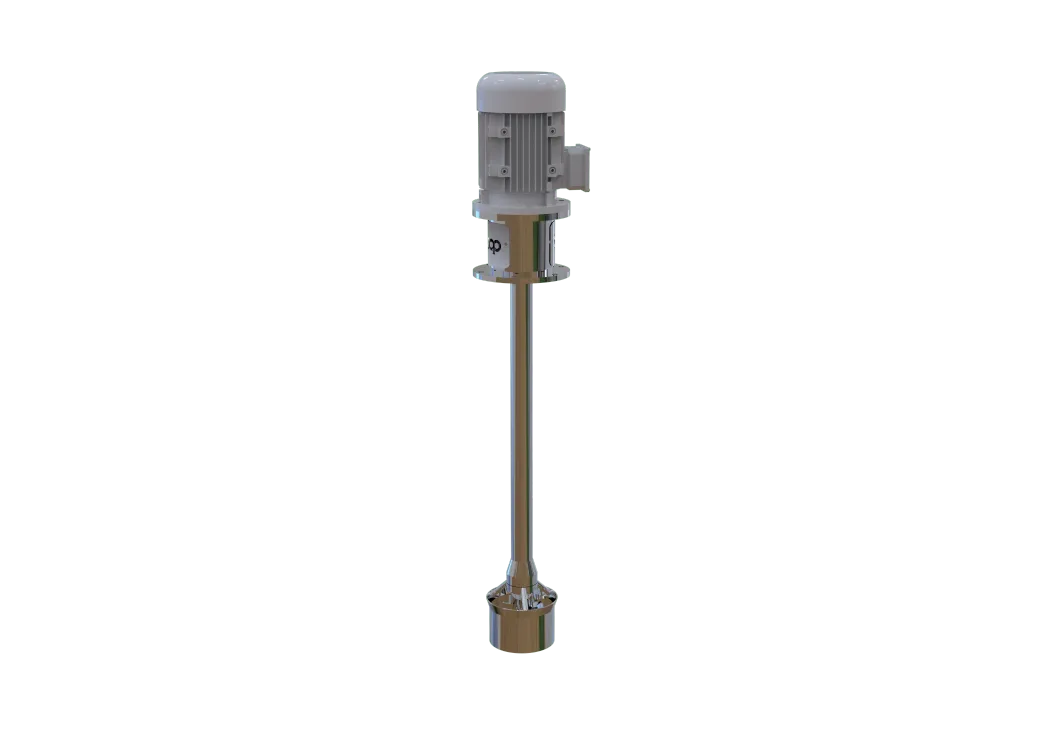
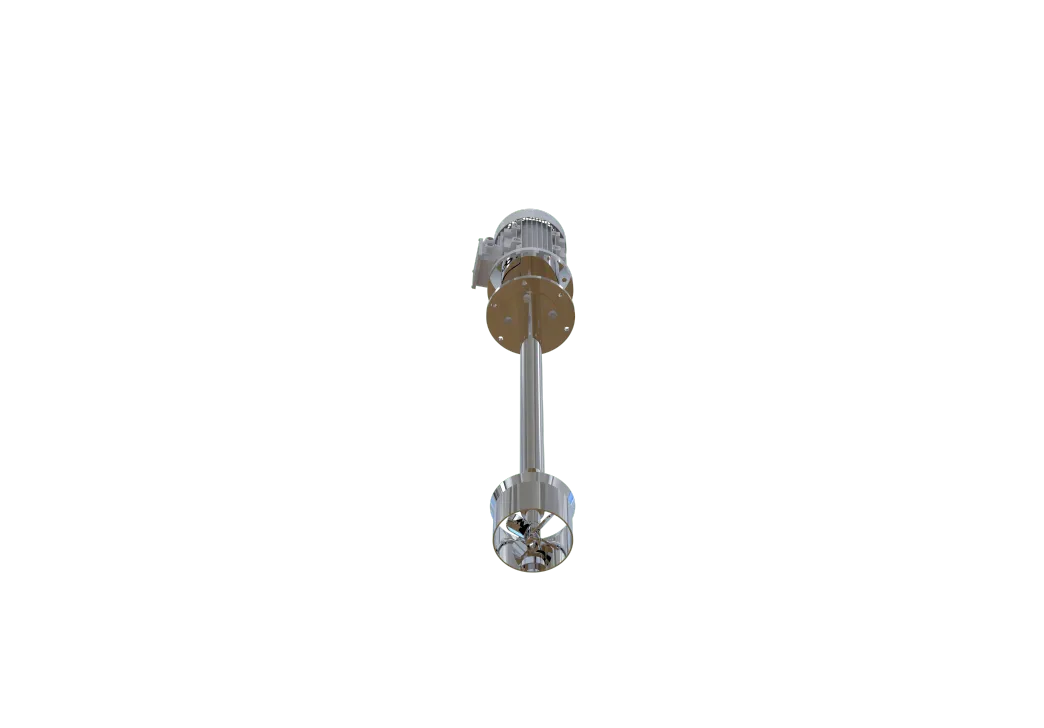
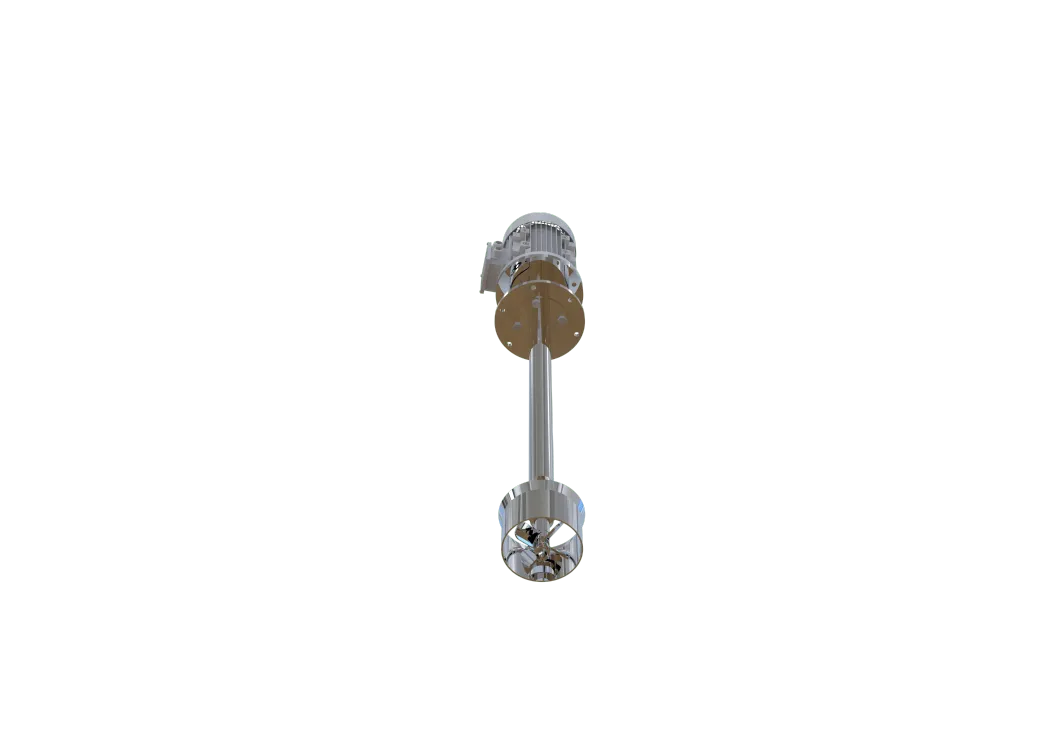
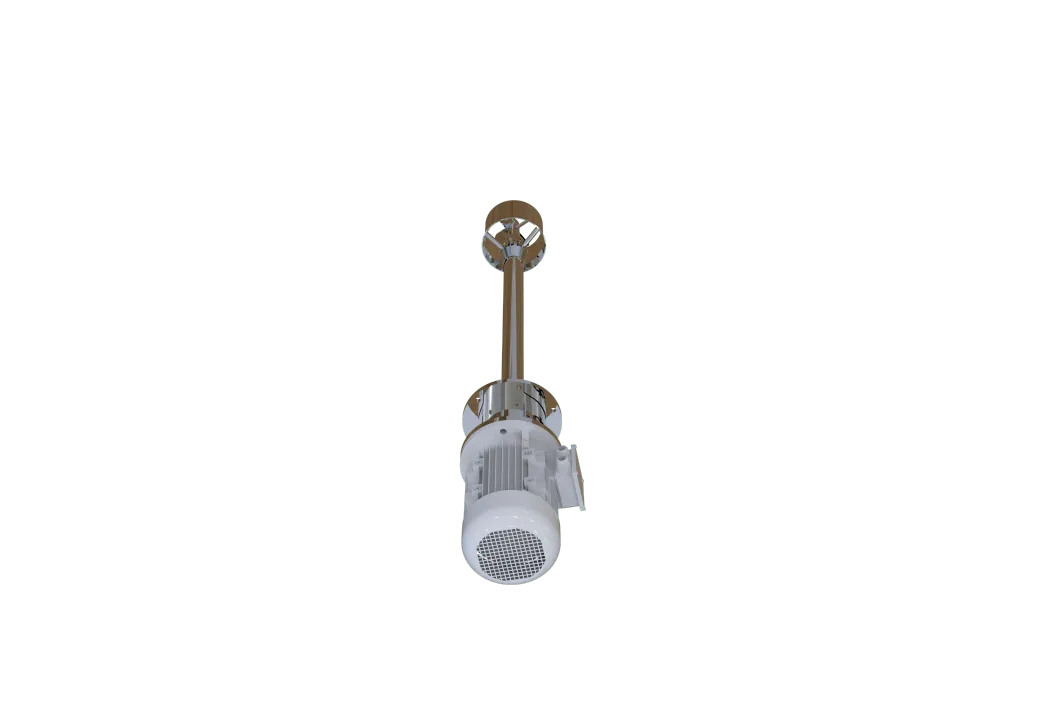
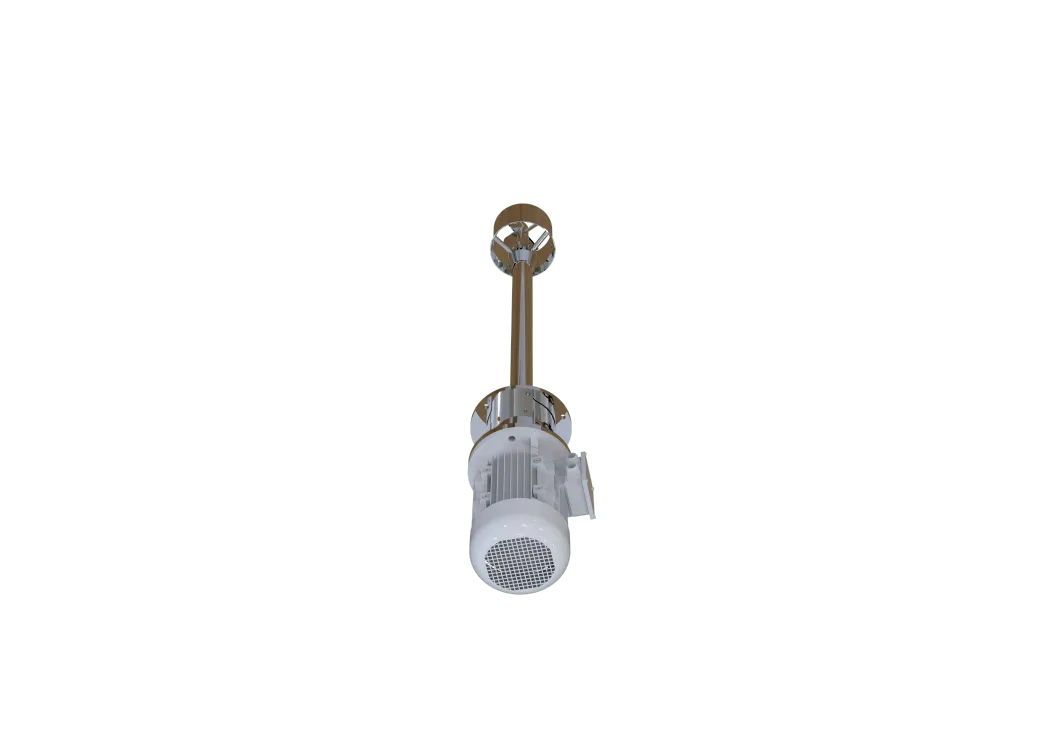
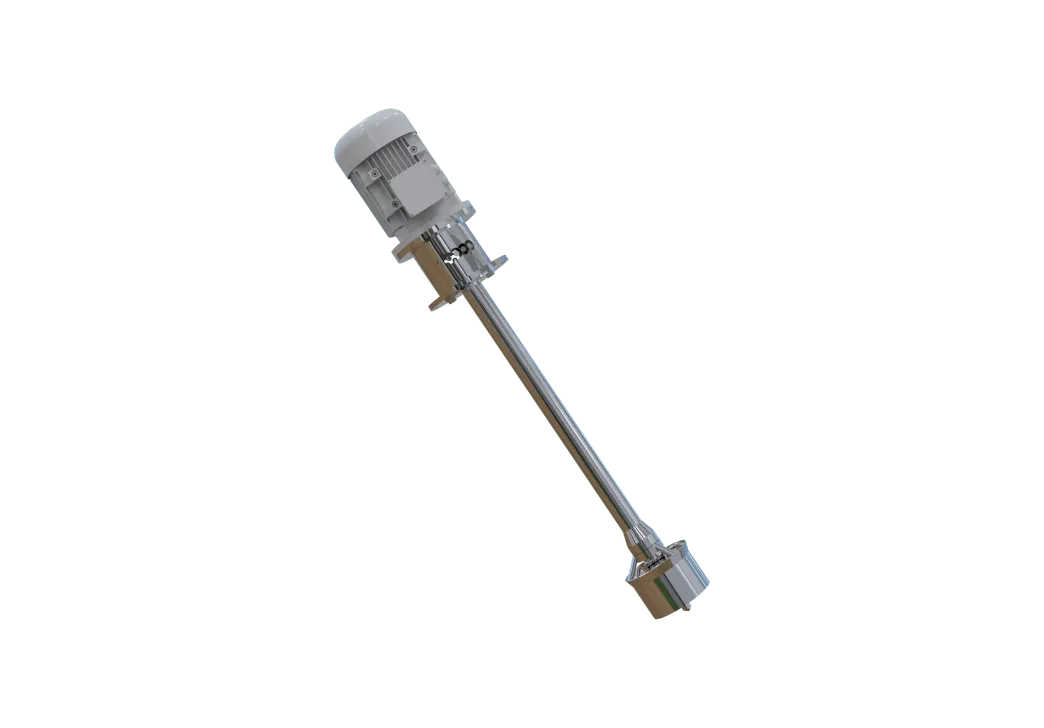
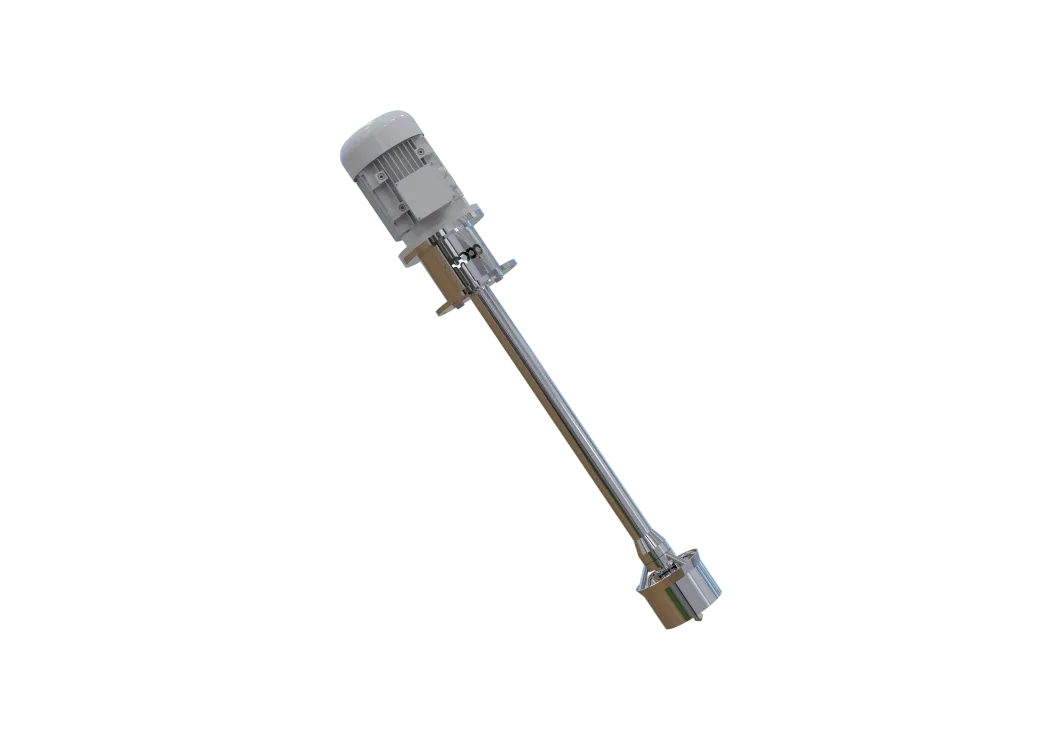
In many industrial mixing processes, achieving rapid circulation, uniform blending, and efficient solid-liquid contact is far more critical than simply increasing raw agitation intensity. For demanding applications such as powder dissolution, material dispersion, and batch preparation, a mixing system must generate a powerful circulation loop while maintaining stable, continuous operation.
The FRJ Axial-Radial Flow Jet Mixer is engineered precisely to meet these strict process requirements. By combining distinct axial and radial flow characteristics, it establishes a high-velocity circulation pattern inside the vessel, accelerating material turnover and maximizing mixing efficiency. Unlike high-shear emulsifying equipment, the FRJ focuses entirely on high-speed dispersion, solid-liquid dissolution, and general-purpose blending. It is ideal for processes requiring rapid integration and efficient material distribution, though it is not intended to replace specialized emulsification or homogenization machinery.
Dual-Flow Architecture for Enhanced Mixing Dynamics
An industrial mixer’s overall performance hinges entirely on its flow pattern, as fluid trajectories dictate how effectively materials circulate within the tank. The FRJ Axial-Radial Flow Jet Mixer overcomes the limitations of single-direction impellers by generating a synchronized, combined axial and radial flow effect:
- The Axial Flow Vector: Drives vertical circulation throughout the vessel, ensuring seamless material movement between different liquid levels and preventing stratification.
- The Radial Flow Vector: Enhances horizontal distribution and intensifies contact between different components across the tank's width.
- This combined flow structure delivers substantial operational advantages, including faster volumetric turnover, a highly uniform distribution of solid particles or dissolved ingredients, and a drastic reduction in localized concentration gradients. When compared to the FRL series, the FRJ delivers a much larger circulation capacity, making it exceptionally suited for production environments where batch turnover speed and mixing efficiency are top priorities.
Engineered for Rapid Dissolution and Powder Dispersion
Countless manufacturing chains depend on the rapid integration of powders, additives, or solid particulates into liquid media. Suboptimal mixing conditions inevitably trigger processing headaches, such as floating powders on the liquid surface, uneven batch concentrations, or unnecessarily prolonged processing times. The FRJ Axial-Radial Flow Jet Mixer eliminates these issues by driving rigorous fluid motion and forcing immediate interaction between the solid and liquid phases.
Typical industrial applications include:
- Powder wetting and complete dissolution
- Additive blending
- Raw material dispersion
- Batch preparation processes
- Chemical and general industrial liquid mixing
- The FRJ excels when the primary operational objective is fast, uniform dispersion rather than the application of extreme localized shear forces.
Optimized Fluid Circulation Without Destructive Shear
Different mixing applications demand highly specific levels of mechanical stress. While certain processes require intensive particle-size reduction or droplet minification, many industrial formulation steps only necessitate high-volume circulation and dispersion.
The FRJ is specifically developed for processes where excessive mechanical shear offers no technical benefits. Its flow-based mixing mechanism focuses strictly on accelerating material turnover and shortening batch cycles while fully preserving the original physical characteristics of your processed ingredients. For applications that require true emulsification, homogenization, or ultra-fine droplet formation, dedicated high-shear emulsifying equipment remains the correct choice.
Flexible Mounting and Mechanical Adaptation
To remain practical, industrial processing equipment must adapt easily to various tank geometries and pre-existing facility layouts. The FRJ Axial-Radial Flow Jet Mixer supports versatile mounting configurations, allowing for vertical, inclined, or eccentric (off-center) installations.
This architectural flexibility allows the mixer to be seamlessly integrated into:
- Process reactors
- Standard mixing tanks
- Preparation vessels
- Customized production containers
For unique tank geometries or deep-vessel installations, customized extended shaft configurations can be engineered to ensure the jet impeller is positioned for optimal fluid dynamics.
Configurable to Diverse Industrial Parameters
Before selecting a jet mixer, several critical process variables must be thoroughly evaluated. The ideal equipment configuration depends not only on total tank volume but also on the specific physical properties of the process media. Key selection criteria include:
- Medium Characteristics: The viscosity, density, solid content, and particle size of the medium directly dictate mixing performance. Different fluid behaviors require tailored mixing dynamics to maintain effective circulation.
- Process Requirements: The target operation must be clearly defined—whether it is dissolution, dispersion, standard blending, particle breakup, or deagglomeration. (Processes demanding true emulsification or homogenization will require alternative equipment types).
- Operating Pressure and Sealing: The FRJ is fully configurable to match the pressure rating of the containment vessel. For atmospheric tanks, standard low-maintenance sealing solutions are available, while pressurized reactors can be equipped with heavy-duty mechanical seal configurations to handle rigorous operating demands.
Hygienic Standards and Reliable Component Execution
To withstand aggressive process chemistries and meet stringent clean-room standards, the FRJ Axial-Radial Flow Jet Mixer can be fabricated from high-grade stainless steel, such as 304 or 316L. For processes requiring exceptional surface cleanliness, optional electropolishing treatments are available to enhance the surface finish and prevent material adhesion in hygienic processing environments.
These flexible material and finishing choices make the FRJ highly adaptable to sectors where corrosion resistance, cleanability, and mechanical reliability are vital. Consequently, it is a proven choice for chemical liquid preparation, food and beverage compounding, pharmaceutical and biotech batching, industrial formulations, and various solid-liquid blending operations. Its high-volume circulation capacity provides a highly practical, reliable solution for batch processing systems where production consistency and efficiency are paramount.
Selecting the Right Solution for Your Process
An optimized mixing setup requires balancing equipment design with your final process goals. A system built for maximum circulation and dispersion may not suit every fluid application. When configuring your FRJ Axial-Radial Flow Jet Mixer, manufacturers should evaluate:
- Material viscosity and fluid density
- The presence and characteristics of solid particles
- The required volumetric mixing intensity
- The structural dimensions and installation angle of the vessel
- The specific functional target (dispersion, dissolution, or blending)
With the correct tailored configuration, the FRJ delivers dependable mixing performance, drastically shorter production cycles, and superior batch-to-batch consistency.

Description
In many industrial mixing processes, achieving rapid circulation, uniform blending, and efficient solid-liquid contact is far more critical than simply increasing raw agitation intensity. For demanding applications such as powder dissolution, material dispersion, and batch preparation, a mixing system must generate a powerful circulation loop while maintaining stable, continuous operation.
The FRJ Axial-Radial Flow Jet Mixer is engineered precisely to meet these strict process requirements. By combining distinct axial and radial flow characteristics, it establishes a high-velocity circulation pattern inside the vessel, accelerating material turnover and maximizing mixing efficiency. Unlike high-shear emulsifying equipment, the FRJ focuses entirely on high-speed dispersion, solid-liquid dissolution, and general-purpose blending. It is ideal for processes requiring rapid integration and efficient material distribution, though it is not intended to replace specialized emulsification or homogenization machinery.
Dual-Flow Architecture for Enhanced Mixing Dynamics
An industrial mixer’s overall performance hinges entirely on its flow pattern, as fluid trajectories dictate how effectively materials circulate within the tank. The FRJ Axial-Radial Flow Jet Mixer overcomes the limitations of single-direction impellers by generating a synchronized, combined axial and radial flow effect:
- The Axial Flow Vector: Drives vertical circulation throughout the vessel, ensuring seamless material movement between different liquid levels and preventing stratification.
- The Radial Flow Vector: Enhances horizontal distribution and intensifies contact between different components across the tank's width.
- This combined flow structure delivers substantial operational advantages, including faster volumetric turnover, a highly uniform distribution of solid particles or dissolved ingredients, and a drastic reduction in localized concentration gradients. When compared to the FRL series, the FRJ delivers a much larger circulation capacity, making it exceptionally suited for production environments where batch turnover speed and mixing efficiency are top priorities.
Engineered for Rapid Dissolution and Powder Dispersion
Countless manufacturing chains depend on the rapid integration of powders, additives, or solid particulates into liquid media. Suboptimal mixing conditions inevitably trigger processing headaches, such as floating powders on the liquid surface, uneven batch concentrations, or unnecessarily prolonged processing times. The FRJ Axial-Radial Flow Jet Mixer eliminates these issues by driving rigorous fluid motion and forcing immediate interaction between the solid and liquid phases.
Typical industrial applications include:
- Powder wetting and complete dissolution
- Additive blending
- Raw material dispersion
- Batch preparation processes
- Chemical and general industrial liquid mixing
- The FRJ excels when the primary operational objective is fast, uniform dispersion rather than the application of extreme localized shear forces.
Optimized Fluid Circulation Without Destructive Shear
Different mixing applications demand highly specific levels of mechanical stress. While certain processes require intensive particle-size reduction or droplet minification, many industrial formulation steps only necessitate high-volume circulation and dispersion.
The FRJ is specifically developed for processes where excessive mechanical shear offers no technical benefits. Its flow-based mixing mechanism focuses strictly on accelerating material turnover and shortening batch cycles while fully preserving the original physical characteristics of your processed ingredients. For applications that require true emulsification, homogenization, or ultra-fine droplet formation, dedicated high-shear emulsifying equipment remains the correct choice.
Flexible Mounting and Mechanical Adaptation
To remain practical, industrial processing equipment must adapt easily to various tank geometries and pre-existing facility layouts. The FRJ Axial-Radial Flow Jet Mixer supports versatile mounting configurations, allowing for vertical, inclined, or eccentric (off-center) installations.
This architectural flexibility allows the mixer to be seamlessly integrated into:
- Process reactors
- Standard mixing tanks
- Preparation vessels
- Customized production containers
For unique tank geometries or deep-vessel installations, customized extended shaft configurations can be engineered to ensure the jet impeller is positioned for optimal fluid dynamics.
Configurable to Diverse Industrial Parameters
Before selecting a jet mixer, several critical process variables must be thoroughly evaluated. The ideal equipment configuration depends not only on total tank volume but also on the specific physical properties of the process media. Key selection criteria include:
- Medium Characteristics: The viscosity, density, solid content, and particle size of the medium directly dictate mixing performance. Different fluid behaviors require tailored mixing dynamics to maintain effective circulation.
- Process Requirements: The target operation must be clearly defined—whether it is dissolution, dispersion, standard blending, particle breakup, or deagglomeration. (Processes demanding true emulsification or homogenization will require alternative equipment types).
- Operating Pressure and Sealing: The FRJ is fully configurable to match the pressure rating of the containment vessel. For atmospheric tanks, standard low-maintenance sealing solutions are available, while pressurized reactors can be equipped with heavy-duty mechanical seal configurations to handle rigorous operating demands.
Hygienic Standards and Reliable Component Execution
To withstand aggressive process chemistries and meet stringent clean-room standards, the FRJ Axial-Radial Flow Jet Mixer can be fabricated from high-grade stainless steel, such as 304 or 316L. For processes requiring exceptional surface cleanliness, optional electropolishing treatments are available to enhance the surface finish and prevent material adhesion in hygienic processing environments.
These flexible material and finishing choices make the FRJ highly adaptable to sectors where corrosion resistance, cleanability, and mechanical reliability are vital. Consequently, it is a proven choice for chemical liquid preparation, food and beverage compounding, pharmaceutical and biotech batching, industrial formulations, and various solid-liquid blending operations. Its high-volume circulation capacity provides a highly practical, reliable solution for batch processing systems where production consistency and efficiency are paramount.
Selecting the Right Solution for Your Process
An optimized mixing setup requires balancing equipment design with your final process goals. A system built for maximum circulation and dispersion may not suit every fluid application. When configuring your FRJ Axial-Radial Flow Jet Mixer, manufacturers should evaluate:
- Material viscosity and fluid density
- The presence and characteristics of solid particles
- The required volumetric mixing intensity
- The structural dimensions and installation angle of the vessel
- The specific functional target (dispersion, dissolution, or blending)
With the correct tailored configuration, the FRJ delivers dependable mixing performance, drastically shorter production cycles, and superior batch-to-batch consistency.
Application


Specifications
| Model | FRJ90 | FRJ100 | FRJ110 | FRJ120 | FRJ130 | FRJ140 | FRJ160 | FRJ180 | FRJ200 | FRJ220 | FRJ240 | FRJ260 | FRJ280 | |
|---|---|---|---|---|---|---|---|---|---|---|---|---|---|---|
| Power | 1.5 | 2.2 | 3 | 4 | 5.5 | 7.5 | 11 | 18.5 | 22 | 30 | 45 | 55 | 75 | kw |
| Speed | 2800-2900 | 2800-2900 | 2800-2900 | 2800-2900 | 2800-2900 | 2800-2900 | 2800-2900 | 2800-2900 | 2800-2900 | 2800-2900 | 2800-2900 | 2800-2900 | 2800-2900 | rpm |
| Capacity | 5~50 | 50~100 | 80~200 | 100~300 | 200~600 | 300~800 | 400~1000 | 500~1500 | 800~2000 | 1000~3000 | 1500~5000 | 2000~8000 | 3000~10000 | L |
| Standard Shaft Length | 450 | 650 | 700 | 750 | 850 | 950 | 1100 | 1200 | 1200 | 1350 | 1500 | 1650 | 1800 | mm |
Advantage Comparison


GET IN TOUCH NOW


