


Oral liquid manufacturing involves more than dissolving active ingredients and blending excipients. Depending on the formulation, the preparation process may include suspended particles, crystalline ingredients, mineral compounds, or other solids that require careful handling. Excessive mechanical stress can affect particle size, increase unwanted fines, and complicate downstream filtration or product consistency.
In these applications, the mixing system must balance effective circulation with appropriate mechanical design. A mixer needs to distribute ingredients throughout the vessel without introducing unnecessary friction, wear, or contamination risks from its moving components.
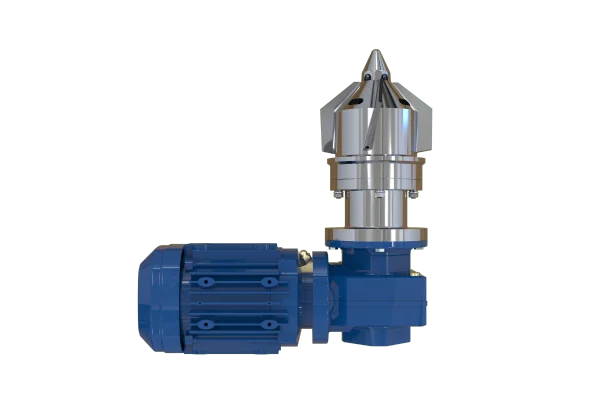
A magnetic levitation bottom-entry agitator, also known as a maglev bottom mixer, offers a design advantage for suitable oral liquid preparation systems. By incorporating a magnetic levitation device into a conventional bottom-entry magnetic agitator, it reduces axial end-face contact within the rotating assembly. This helps limit friction-related wear while supporting mixing operations in stainless steel preparation tanks.
For manufacturers developing complete oral liquid production lines, the agitator should be considered as part of an integrated system that includes the preparation vessel, ingredient charging arrangement, temperature control, transfer equipment, and cleaning provisions.
Why Crystal Integrity Matters in Oral Liquid Preparation
Not every oral liquid formulation contains crystals or abrasive solids. However, when a formulation includes crystalline ingredients or suspended particles, the mixing conditions can influence how those solids behave during processing.
Some crystals may be sensitive to mechanical stress. Excessive shear, repeated particle collisions, or unsuitable circulation patterns can contribute to particle breakage. In other formulations, solid particles may abrade contacting equipment surfaces, while wear debris from mechanical components can introduce an additional contamination concern.
These are different mechanisms and should be evaluated separately. Crystal breakage is primarily influenced by the properties of the material and the stresses generated during mixing and pumping. Equipment wear, by contrast, depends on component contact, material selection, operating conditions, and maintenance.
A suitable mixing system therefore needs to provide enough circulation for ingredient distribution while avoiding unnecessary mechanical contact and excessive process intensity. This is particularly important when the formulation must meet defined requirements for particle size, appearance, homogeneity, or downstream filtration.
How Maglev Bottom Mixers Reduce Friction-Related Wear
Magnetic Levitation Reduces Axial End-Face Contact
A conventional bottom-entry magnetic agitator may experience friction where internal components make axial end-face contact during rotation. Over time, repeated contact can contribute to component wear and potentially generate fine particles.
The maglev design incorporates a levitation device that supports the inner magnetic assembly in a suspended state during operation. This reduces contact at the relevant axial end faces, while radial positioning continues to guide the rotating assembly.
The design does not eliminate every source of friction in the agitator. Instead, it targets a specific contact mechanism that can contribute to wear. For oral liquid production, reducing this type of wear can help lower the risk of particles originating from the affected components entering the process medium.
It is important to distinguish this equipment benefit from direct protection of the formulation's crystals. The magnetic levitation mechanism reduces internal component friction; it does not automatically prevent crystals from breaking under excessive mixing shear. Impeller selection, rotational speed, and process conditions must still be matched to the formulation.
Lower Wear Helps Support Product Cleanliness
In pharmaceutical liquid preparation, product cleanliness depends on both the formulation process and the equipment's condition. Components that experience continuous mechanical contact may gradually wear, especially when operating conditions are unsuitable or maintenance is inadequate.
By reducing axial end-face friction, a maglev bottom mixer helps limit wear associated with those surfaces. This can be beneficial when the production process requires careful control over potential particulate contamination.
However, the agitator should not be described as completely particle-free or inherently compliant with every pharmaceutical standard. Overall cleanliness also depends on product-contact materials, weld quality, surface finish, bearing condition, cleaning procedures, and the design of the complete vessel assembly.
For oral liquid production lines, these factors should be assessed together during equipment selection and hygienic design review.
Why Bottom-Entry Mixing Can Suit Oral Liquid Preparation
The position of the impeller influences circulation within the preparation vessel. A bottom-entry magnetic agitator places the impeller near the vessel floor, allowing mixing action to begin in the lower region of the tank.
This arrangement can be useful when dissolving ingredients, blending liquid excipients, or distributing suitable suspended solids. With the correct impeller and vessel geometry, circulation can help move ingredients away from the addition area and reduce concentration differences throughout the batch.
For formulations containing crystals or particles, the objective is not necessarily to maximize agitation intensity. The mixer should provide enough movement for the required dissolution or suspension while avoiding unnecessarily aggressive conditions.
The final performance depends on liquid viscosity, solids loading, particle characteristics, working volume, tank-bottom geometry, and rotational speed. Where crystal integrity is critical, manufacturers should verify the mixing result through process trials rather than assuming that bottom-entry placement alone guarantees gentle mixing.
Integrating the Agitator into a Complete Oral Liquid Production Line
Selecting a mixer for a pharmaceutical preparation tank is only one part of equipment planning. Its design and operating conditions need to match the complete process, from ingredient charging to final transfer.
Preparation Tank and Ingredient Charging
The preparation vessel should be sized for the intended batch volume and working range. Ingredient addition points should be positioned to support effective wetting and dispersion without creating persistent accumulation zones.
Where crystalline ingredients are used, the charging rate and order of addition can affect dissolution and particle behavior. The mixing procedure should be developed around the formulation rather than relying on agitation alone to resolve every mixing issue.
Transfer and Downstream Processing
After preparation, the oral liquid may need to pass through transfer pipelines, holding vessels, or filtration equipment. Pump selection and pipeline design can influence the stresses experienced by suspended particles and crystals.
If particle integrity matters, the mixer and downstream transfer equipment should be evaluated as one process system. An agitator that operates appropriately in the tank cannot compensate for excessive mechanical stress introduced later by an unsuitable pump or restrictive transfer arrangement.
Cleaning and Hygienic Design
Oral liquid equipment may require validated cleaning procedures and, depending on the product and manufacturing process, specific sterilization provisions. The vessel, agitator, connections, and transfer components should be evaluated together for cleanability, material compatibility, and drainage.
The maglev design reduces axial end-face friction within the agitator, while a suitable stationary isolation sleeve can eliminate the dynamic shaft-seal interface at the vessel drive penetration. These are useful design considerations, but they do not replace the need to verify the complete system's cleaning performance and compliance with applicable requirements.
Key Factors When Selecting a Maglev Bottom Mixer
Before choosing a model for an oral liquid preparation line, manufacturers should assess the following process conditions:
- Formulation properties: Identify viscosity, solids content, crystal characteristics, and sensitivity to mechanical stress.
- Mixing objective: Determine whether the process requires dissolution, homogeneous blending, or suspension maintenance.
- Vessel configuration: Confirm working volume, tank geometry, impeller position, and minimum operating level.
- Operating conditions: Establish the required rotational speed, temperature, batch duration, and any pressure-related requirements.
- Hygienic requirements: Review product-contact materials, surface finish, cleaning procedures, and compatibility with the intended process.
- Complete-line compatibility: Consider ingredient charging, transfer pumps, pipelines, filtration, and downstream holding operations.
These factors help determine whether a maglev bottom mixer is suitable for the actual formulation and production process. Where crystal breakage is a known problem, testing should assess particle-size changes and product quality under representative operating conditions.
For oral liquid preparation systems, protecting crystal integrity and controlling equipment wear require attention to both process conditions and mixer design. A magnetic levitation bottom-entry agitator reduces axial end-face contact within its rotating assembly, helping limit friction-related wear and the associated risk of component-derived particles.
Combined with suitable impeller selection, controlled operating conditions, hygienic vessel design, and compatible transfer equipment, this configuration can support reliable mixing in appropriate oral liquid applications.
The most effective solution is to evaluate the agitator as part of the complete preparation system. Matching the equipment to the formulation, vessel geometry, cleaning requirements, and downstream process helps manufacturers achieve consistent preparation while managing avoidable mechanical wear.


